
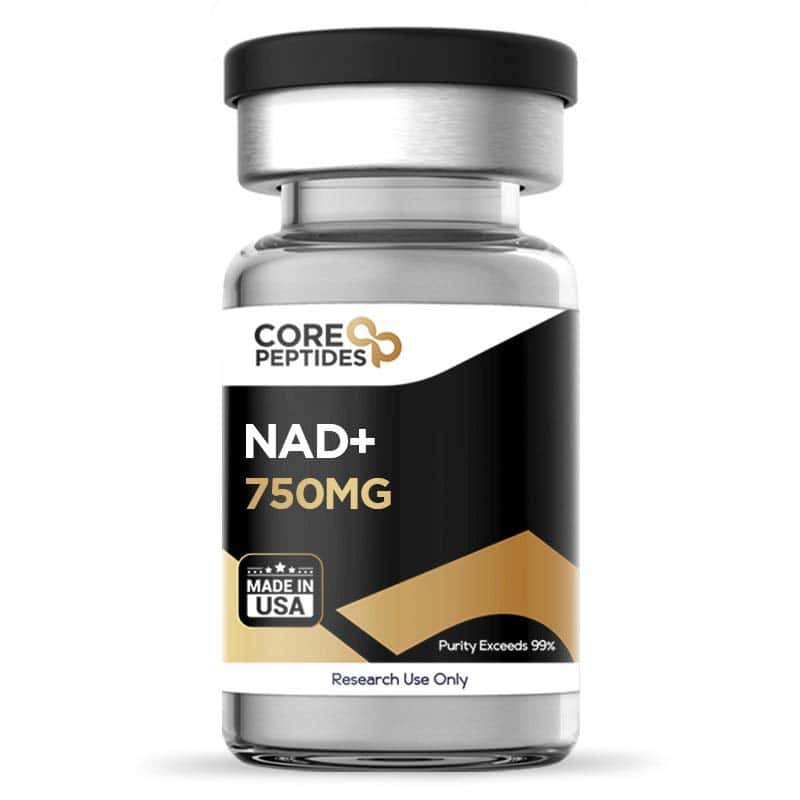
NAD+ (100mg / 250mg / 750mg) – Nicotinamide Adenine Dinucleotide Research Material
NAD+ (100mg / 250mg / 750mg) contains nicotinamide adenine dinucleotide (NAD+), a naturally occurring coenzyme found throughout living cells. NAD+ has a central role in cellular redox reactions and is also used as a substrate or co-substrate by several enzyme families involved in processes including energy metabolism, DNA repair, protein modification and cellular signalling.
The referenced product is supplied as a lyophilised powder and is available in 100mg, 250mg and 750mg quantities. The supplier states a purity of >99% and provides certificates of analysis for the available sizes. It is supplied strictly for research, laboratory and analytical applications.
NAD+ is not a peptide in the conventional amino-acid sense. It is a dinucleotide coenzyme composed of two nucleotide units. Its importance in research stems from its involvement in fundamental biochemical pathways rather than from a peptide-specific mechanism.
What Is NAD+?
NAD+, short for nicotinamide adenine dinucleotide, is an oxidised coenzyme present in essentially all forms of cellular life. It exists in a reversible redox relationship with NADH, allowing the NAD+/NADH pair to participate in the transfer of reducing equivalents during numerous metabolic reactions.
In addition to its classical role in redox chemistry, NAD+ serves as a substrate or co-substrate for enzymes involved in signalling and post-translational modification. These include sirtuins, poly(ADP-ribose) polymerases (PARPs), CD38 and related enzymes.
This combination of metabolic and signalling functions makes NAD+ an important subject in biochemical, cellular and molecular biology research.
NAD+ (100mg / 250mg / 750mg) Product Specifications
| Specification | Details |
|---|---|
| Product Name | NAD+ |
| Full Name | Nicotinamide adenine dinucleotide |
| Available Quantities | 100mg / 250mg / 750mg |
| Form | Lyophilised powder |
| Stated Purity | >99% |
| Molecular Formula | C21H27N7O14P2 |
| Molecular Weight | 663.43 g/mol |
| Alternative Name | Nicotinamide adenine dinucleotide |
| Research Areas | Cellular metabolism, redox biology, DNA repair, signalling and mitochondrial research |
| Intended Application | Research, laboratory and analytical use only |
The specifications above reflect the referenced supplier listing. Batch-specific identity, purity and analytical characteristics should always be confirmed using the applicable certificate of analysis.
How NAD+ Functions in Cells
NAD+ has two closely connected biological roles. First, it acts as a redox coenzyme, accepting and donating electrons in metabolic reactions. Second, it serves as a substrate for enzymes involved in cellular signalling and protein modification.
During redox reactions, NAD+ can be reduced to NADH. NADH can subsequently donate reducing equivalents to metabolic pathways, including processes associated with mitochondrial oxidative phosphorylation and cellular energy generation. The balance between NAD+ and NADH is therefore an important feature of cellular metabolic regulation.
Separately, NAD+ can be consumed by enzymes such as sirtuins and PARPs. Consequently, cellular NAD+ availability is influenced by both its synthesis and its utilisation in different biochemical pathways.
NAD+ and Cellular Energy Metabolism
One of the most established areas of NAD+ research concerns energy metabolism. NAD+ participates in numerous oxidation-reduction reactions involved in the breakdown and utilisation of nutrients.
Through its reversible conversion between NAD+ and NADH, the coenzyme helps transfer reducing equivalents between metabolic reactions. These reactions are fundamental to pathways such as glycolysis, the tricarboxylic acid cycle and mitochondrial respiration.
Researchers therefore frequently examine NAD+ and the NAD+/NADH ratio when investigating mitochondrial function, metabolic adaptation and cellular responses to changes in nutrient availability.
NAD+ and Mitochondrial Research
Mitochondria depend on redox reactions to support cellular energy production, making NAD+ biology closely connected with mitochondrial research.
Within metabolic pathways, NAD+ and NADH participate in reactions that transfer electrons towards the mitochondrial respiratory chain. Changes in NAD+ availability or in the NAD+/NADH balance can therefore influence the biochemical environment in which mitochondrial metabolism occurs.
Current research also examines how NAD+ metabolism interacts with mitochondrial homeostasis, oxidative stress, cellular signalling and age-associated changes. These relationships are complex and remain an active area of investigation.
NAD+ and Sirtuin Research
Sirtuins are NAD+-dependent enzymes involved in protein deacetylation and other deacylation reactions. Because these enzymes consume NAD+, their activity is influenced by the availability of the coenzyme and by the wider metabolic state of the cell.
Sirtuins have been studied in connection with metabolism, mitochondrial function, stress responses, chromatin regulation and ageing biology.
This has made NAD+ an important research variable when investigating how metabolic state can influence enzyme-mediated signalling and post-translational protein modification.
NAD+ and DNA Repair Research
NAD+ is also involved in research into DNA damage responses. One important enzyme family in this area is the poly(ADP-ribose) polymerase, or PARP, family.
PARP enzymes use NAD+ as a substrate during ADP-ribosylation reactions. These reactions contribute to cellular responses to DNA damage and are therefore relevant to studies of genome stability and DNA repair mechanisms.
Because PARPs consume NAD+, increased activity of these enzymes can affect cellular NAD+ availability. Researchers consequently investigate the relationship between DNA damage, NAD+ consumption and metabolic homeostasis.
NAD+ and Cellular Signalling
Beyond redox metabolism, NAD+ participates in several signalling pathways.
NAD+-dependent enzymes can generate or utilise signalling molecules derived from NAD+. For example, enzymes such as CD38 participate in NAD+ metabolism and the production of calcium-mobilising messenger molecules including cyclic ADP-ribose.
These pathways connect NAD+ metabolism with calcium signalling, immune-cell biology and broader cellular communication.
NAD+ and Cellular Stress Research
NAD+ metabolism is closely linked with the cellular response to environmental and physiological stressors.
Research has examined changes in NAD+ availability in response to factors including oxidative stress, DNA damage, inflammation, metabolic disturbance and ageing. Because NAD+ is both a metabolic cofactor and a substrate for signalling enzymes, changes in its concentration can potentially affect several cellular processes simultaneously.
This makes NAD+ a useful research subject for studies examining how cells maintain metabolic and signalling homeostasis under changing conditions.
NAD+ Biosynthesis and Metabolic Pathways
Cells maintain NAD+ pools through several interconnected biosynthetic pathways. Research literature identifies precursors and routes involving tryptophan, nicotinamide, nicotinic acid, nicotinamide riboside (NR) and nicotinamide mononucleotide (NMN).
The ability of cells to synthesise and recycle NAD+ is important because the coenzyme is continually consumed by redox reactions and NAD+-dependent signalling enzymes.
Researchers investigating NAD+ metabolism may therefore examine both biosynthesis and degradation, as well as the relative concentrations of NAD+, NADH and related metabolites.
NAD+ and NADH
NAD+ and NADH form a central redox pair in cellular metabolism.
| Feature | NAD+ | NADH |
|---|---|---|
| Redox State | Oxidised | Reduced |
| Primary Role | Electron acceptor and signalling substrate | Electron donor in metabolic reactions |
| Metabolic Relationship | Reduced to NADH | Oxidised back to NAD+ |
| Research Relevance | Redox balance, signalling and metabolism | Reducing equivalents and energy metabolism |
The ratio between NAD+ and NADH is often more informative in metabolic research than the concentration of either molecule considered in isolation.
NAD+ and Ageing Research
NAD+ biology has become an important area of ageing research. Studies have reported that NAD+ availability can decline with age and have investigated whether alterations in NAD+ metabolism contribute to age-associated changes in cellular function.
Research has explored connections between NAD+ metabolism, mitochondrial function, DNA repair, cellular senescence, inflammation and metabolic regulation.
However, the biological significance of age-related NAD+ changes and the most effective approaches for manipulating NAD+ metabolism remain active research questions. Recent reviews specifically emphasise that substantial uncertainties remain regarding the biology and therapeutic targeting of NAD+.
NAD+ and Metabolic Research
Because NAD+ is involved in multiple metabolic reactions, it is frequently studied in models of altered glucose and lipid metabolism.
Experimental research has investigated how NAD+ metabolism interacts with pathways regulating nutrient utilisation, mitochondrial activity and cellular energy balance. Research involving NAD+ precursors has also examined whether increasing cellular NAD+ availability changes metabolic outcomes in experimental models.
These findings provide a basis for continued laboratory investigation but should not be interpreted as evidence that research-grade NAD+ products are treatments for metabolic disorders.
NAD+ and Cardiovascular Research
NAD+ biology has also been investigated in cardiovascular research. NAD+-dependent metabolic and signalling pathways are relevant to mitochondrial energy production, oxidative stress responses and cellular adaptation.
Preclinical research involving NAD+ metabolism and its precursors has examined cardiovascular outcomes in experimental models. Some studies have reported potentially protective effects under specific experimental conditions, including models of ischaemic injury.
These observations remain part of the research literature and should not be interpreted as establishing NAD+ as an approved cardiovascular treatment.
NAD+ and Neurobiology Research
NAD+ is also studied in neuroscience because neuronal cells have substantial metabolic requirements and rely on tightly regulated energy and redox pathways.
Research has examined relationships between NAD+ metabolism, neuronal plasticity, DNA repair, mitochondrial function and neurodegenerative processes. Altered NAD+ homeostasis has been associated with several neurological and age-associated conditions in experimental research.
At the same time, researchers continue to investigate how changes in NAD+ pools translate into functional effects within specific cellular compartments and tissues.
NAD+ and Cellular Compartmentation
NAD+ is not distributed uniformly throughout a cell. Separate pools exist in compartments such as the cytosol, mitochondria and nucleus, where NAD+ participates in different metabolic and signalling processes.
This compartmentalisation is important because altering total cellular NAD+ does not necessarily produce identical changes in every cellular compartment. Research has highlighted the importance of considering compartment-specific NAD+ concentrations and NAD+/NADH ratios when interpreting experimental findings.
For laboratories studying NAD+ biology, this provides an important consideration when designing experiments and interpreting biochemical measurements.
Potential Research Applications
NAD+ may be relevant to a broad range of laboratory investigations, including:
- Cellular metabolism: Studying NAD+-dependent redox reactions and metabolic pathways.
- Redox biology: Investigating the NAD+/NADH balance and electron-transfer reactions.
- Mitochondrial research: Examining relationships between NAD+ metabolism and mitochondrial energy production.
- DNA repair: Studying NAD+-dependent PARP activity and cellular responses to DNA damage.
- Sirtuin research: Investigating NAD+-dependent deacetylase and deacylase pathways.
- Cellular signalling: Examining NAD+-derived signalling molecules and calcium-related pathways.
- Ageing biology: Investigating age-associated changes in NAD+ metabolism.
- Neurobiology: Studying NAD+ availability in neuronal and mitochondrial models.
- Metabolic research: Examining NAD+ dynamics in glucose and lipid metabolism models.
- Analytical chemistry: Characterising NAD+ concentration, purity and stability under controlled conditions.
Why Researchers Study NAD+
NAD+ occupies a unique position at the intersection of metabolism and cellular signalling. Unlike a molecule involved in only one biochemical pathway, NAD+ participates in numerous reactions and is consumed by multiple enzyme families.
This makes NAD+ particularly valuable for research into the relationship between energy metabolism, redox state, DNA repair, protein modification and cellular signalling.
Researchers can also examine NAD+ alongside related compounds such as NADH, NMN, NR and nicotinamide to investigate how changes in synthesis, recycling and consumption affect cellular NAD+ homeostasis.
Available NAD+ Quantities
| Option | Quantity | Format |
|---|---|---|
| NAD+ 100mg | 100mg | Lyophilised powder |
| NAD+ 250mg | 250mg | Lyophilised powder |
| NAD+ 750mg | 750mg | Lyophilised powder |
The referenced supplier lists all three quantities and states a purity of greater than 99%. Certificates of analysis are provided for the respective product sizes.
NAD+ Compared With NAD+ Precursors
NAD+ can be distinguished from compounds such as nicotinamide riboside (NR) and nicotinamide mononucleotide (NMN), which participate in NAD+ biosynthesis.
| Compound | Relationship to NAD+ | Research Focus |
|---|---|---|
| NAD+ | Active coenzyme | Redox reactions, signalling and NAD+-dependent enzymes |
| NADH | Reduced form of NAD+ | Electron transfer and metabolic redox balance |
| NMN | NAD+ biosynthetic intermediate | NAD+ synthesis and metabolic research |
| NR | NAD+ precursor | NAD+ biosynthesis and cellular metabolism |
| Nicotinamide | NAD+ precursor and breakdown product | NAD+ salvage pathways |
Studies have shown that NAD+ precursors such as NR and NMN can influence NAD+ concentrations in experimental systems, making them important tools for studying NAD+ biosynthesis and homeostasis.
Frequently Asked Questions About NAD+ (100mg / 250mg / 750mg)
What is NAD+?
NAD+ stands for nicotinamide adenine dinucleotide. It is a naturally occurring cellular coenzyme involved in redox metabolism and numerous NAD+-dependent signalling and enzymatic processes.
Is NAD+ a peptide?
No. Although the referenced supplier categorises it alongside peptide research products, NAD+ is a dinucleotide coenzyme rather than a peptide made from a chain of amino acids.
What quantities are available?
The referenced product is available in 100mg, 250mg and 750mg quantities.
What form is NAD+ supplied in?
The product is supplied as a lyophilised powder.
What is the stated purity?
The supplier states a purity of >99%. Researchers should use the applicable certificate of analysis to verify batch-specific analytical results.
What does NAD+ do in cells?
NAD+ functions as a redox coenzyme and as a substrate or co-substrate for enzymes involved in processes including sirtuin activity, ADP-ribosylation and cellular signalling.
What is the difference between NAD+ and NADH?
NAD+ is the oxidised form, while NADH is the reduced form. The two molecules form a reversible redox pair that helps transfer reducing equivalents during cellular metabolism.
Why is NAD+ important in energy metabolism?
NAD+ participates in oxidation-reduction reactions throughout metabolic pathways, allowing electrons to be transferred between substrates and contributing to processes that support cellular energy production.
Why is NAD+ studied in ageing research?
Research indicates that NAD+ availability can change with age, and scientists are investigating relationships between NAD+ metabolism, mitochondrial function, DNA repair, cellular senescence and other age-associated processes.
Is NAD+ used in DNA repair research?
Yes. PARP enzymes use NAD+ as a substrate during ADP-ribosylation reactions associated with cellular responses to DNA damage, making NAD+ an important subject in genome-maintenance research.
Is NAD+ related to sirtuins?
Yes. Sirtuins are NAD+-dependent enzymes, meaning that NAD+ availability is directly relevant to their biochemical activity. Sirtuins are studied in areas including metabolism, protein modification, mitochondrial biology and ageing.
Is research-grade NAD+ intended for human consumption?
No. The referenced product is explicitly designated for research, laboratory and analytical purposes only and is not intended for human or animal consumption.
Can NAD+ be described as an anti-ageing treatment?
No. NAD+ is an important subject of ageing research, but research interest does not establish a research-grade NAD+ product as an anti-ageing treatment. Current scientific literature continues to identify significant unanswered questions concerning NAD+ biology and therapeutic manipulation.
NAD+ (100mg / 250mg / 750mg) Research Summary
NAD+ (100mg / 250mg / 750mg) is a research-grade preparation of nicotinamide adenine dinucleotide supplied as lyophilised powder. The referenced product is available in three quantities—100mg, 250mg and 750mg—with a stated purity above 99%.
NAD+ is a fundamental cellular coenzyme involved in redox metabolism and also serves as a substrate or co-substrate for enzymes including sirtuins, PARPs and CD38-related pathways. These functions connect NAD+ biology with energy metabolism, mitochondrial activity, DNA repair, protein modification and cellular signalling.
Its role in ageing, metabolic health, neurobiology and mitochondrial function continues to receive substantial research attention. At the same time, current reviews emphasise that important questions remain regarding NAD+ metabolism, compartment-specific biology and the clinical implications of manipulating NAD+ levels.
For qualified laboratories, NAD+ provides a versatile research material for investigating cellular redox biology, metabolic pathways, NAD+-dependent enzymes, mitochondrial processes, DNA-damage responses and related biochemical mechanisms.
Research-Use Disclaimer
NAD+ (100mg / 250mg / 750mg) is intended exclusively for research, laboratory, analytical and in-vitro experimental purposes. It is not intended for human or animal consumption, self-administration, diagnosis, treatment, cure or prevention of any disease.
Scientific information regarding NAD+ biology is provided for research context only. Findings from cell studies, animal models or research involving NAD+ precursors should not automatically be interpreted as evidence that research-grade NAD+ products provide therapeutic benefits in humans.
Researchers should consult the current certificate of analysis and product documentation for batch-specific information and conduct all laboratory work in accordance with applicable legislation, institutional requirements and appropriate laboratory safety procedures.
| Please select a size | 100mg, 250mg, 750mg |
|---|
Be the first to review “NAD+ (100mg / 250mg / 750mg)”
Related products
Peptides for Sale
Peptides for Sale
Peptides for Sale
Peptides for Sale
Peptides for Sale
Peptide Blends for Sale
Peptides for Sale
Peptides for Sale
Reviews
There are no reviews yet.