
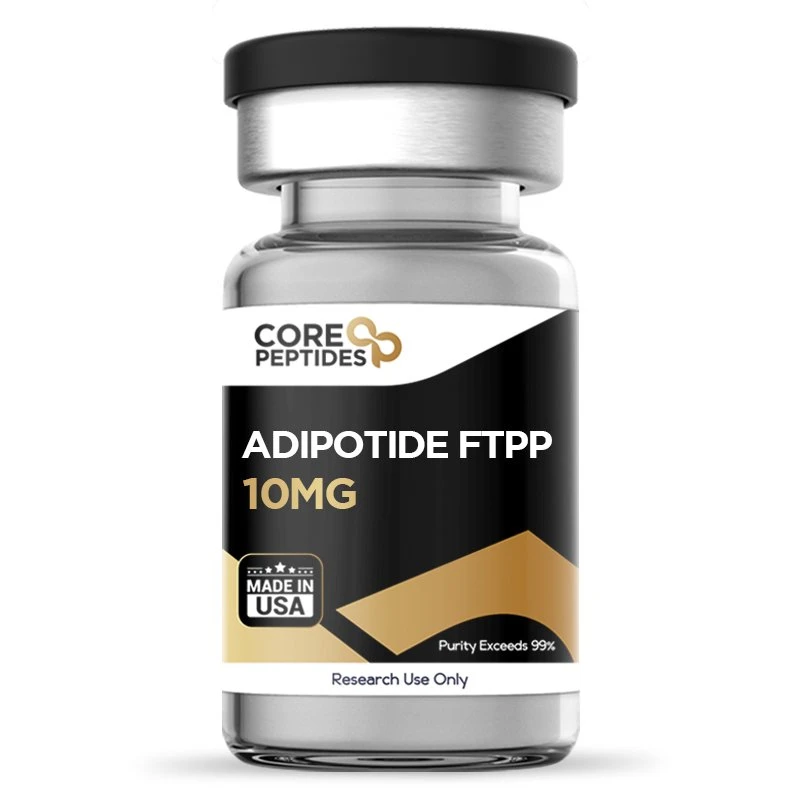


Adipotide (FTPP) (10mg) – Research-Grade Fat-Targeted Proapoptotic Peptide
Adipotide (FTPP) (10mg) is an experimental synthetic peptide investigated for its ability to target the vasculature associated with white adipose tissue. Also referred to as Fat-Targeted Proapoptotic Peptide (FTPP), Prohibitin-Targeting Peptide 1 and prohibitin-targeting peptide, Adipotide has attracted scientific interest because of its proposed ability to selectively interact with proteins associated with adipose-tissue blood vessels and trigger proapoptotic processes.
Unlike conventional metabolic or appetite-regulating research compounds, Adipotide was designed around a different biological concept: targeting the vascular supply associated with white adipose tissue.
Its proposed mechanism combines a targeting sequence with a proapoptotic sequence, allowing researchers to investigate whether selective targeting of adipose-associated endothelial cells can influence adipose-tissue biology.
Preclinical studies have reported changes in body weight, adipose-tissue mass and metabolic parameters in animal models. However, Adipotide remains an experimental research compound, and its development has been limited by safety concerns, particularly those involving renal effects. It should therefore not be presented as an established weight-management treatment or approved medicine.
The Core Peptides product is supplied as a 10mg lyophilised powder with a stated purity of >99% and SKU P-ADIPOTID-10. The supplier identifies the material as intended for research and laboratory purposes only and states that it is not intended for human or animal consumption.
What Is Adipotide (FTPP)?
Adipotide is a synthetic chimeric proapoptotic peptide developed to investigate the possibility of selectively targeting the blood vessels associated with white adipose tissue. The name FTPP refers to Fat-Targeted Proapoptotic Peptide, reflecting the two principal concepts incorporated into its design: tissue targeting and induction of apoptosis.
The compound is commonly described as containing the targeting sequence CKGGRAKDC together with the proapoptotic sequence D(KLAKLAK)2. A short glycine-rich linker connects the functional components.
The targeting portion has been investigated for its affinity for prohibitin, a protein associated with the surface of endothelial cells in the vasculature of white adipose tissue. Once internalised, the proapoptotic component is proposed to disrupt mitochondrial membranes, potentially triggering programmed cell death.
This approach distinguishes Adipotide from compounds that primarily alter appetite, gastrointestinal signalling or general energy expenditure. Its research rationale is instead centred on targeted vascular disruption and apoptosis.
Adipotide (FTPP) (10mg) Product Highlights
- Product name: Adipotide (FTPP)
- Quantity: 10mg
- Alternative name: Fat-Targeted Proapoptotic Peptide
- Other designation: Prohibitin-Targeting Peptide 1
- Product type: Synthetic chimeric proapoptotic peptide
- Form: Lyophilised powder
- Stated purity: >99%
- Molecular formula: C152H252N44O42
- Molecular weight: 2611.41 g/mol
- SKU: P-ADIPOTID-10
- Research classification: Research and laboratory material
- Human use: Not intended for human consumption
- Animal use: Not intended for animal consumption
How Does Adipotide Work?
The proposed mechanism of Adipotide involves two functional regions. The first is the targeting sequence, which is associated with recognition of prohibitin on endothelial cells within the vasculature of white adipose tissue. The second is a proapoptotic sequence that is designed to disrupt intracellular mitochondrial membranes following cellular internalisation.
In the proposed model, the targeting component helps concentrate the peptide around particular adipose-associated vascular cells. Following internalisation, the proapoptotic portion may interact with mitochondrial membranes and compromise their integrity. Mitochondrial disruption can activate cellular pathways associated with apoptosis.
The broader research hypothesis is that damage to the microvasculature supporting white adipose tissue could reduce the blood supply available to associated adipocytes and contribute to adipose-tissue loss.
This mechanism remains an experimental research model. The targeting process is not perfectly exclusive to adipose tissue, and the potential for effects on other vascular tissues is an important consideration when evaluating the compound’s safety profile.
Adipotide and Prohibitin Research
Prohibitin is a multifunctional protein that has been investigated in relation to cell proliferation, mitochondrial function, metabolism and signalling. Research has identified prohibitin at the surface of certain endothelial cells, including endothelial cells associated with white adipose tissue vasculature.
The discovery of tissue-associated vascular markers provided a foundation for developing peptides capable of selectively recognising particular vascular environments. Adipotide emerged from this research as a compound designed to exploit the presence of prohibitin in adipose-associated vascular tissue.
Consequently, Adipotide is of interest not only as a metabolic research compound but also as an example of vascular-targeting peptide technology.
Adipotide and White Adipose Tissue
White adipose tissue is a specialised tissue responsible for storing energy in the form of triglycerides. It also functions as an endocrine organ and releases signalling molecules known as adipokines.
The growth and maintenance of adipose tissue depend partly on its vascular network. Endothelial cells supply oxygen and nutrients while participating in tissue remodelling and communication with adipocytes.
Adipotide research is based on the hypothesis that selectively targeting the vasculature supporting white adipose tissue could influence the survival and maintenance of nearby fat cells. This differs conceptually from conventional lipolysis, in which stored triglycerides are mobilised from existing adipocytes without necessarily destroying the adipocytes themselves.
Studying this distinction can help researchers investigate the relationship between vascular biology, adipose-tissue maintenance and metabolic regulation.
Adipotide as a Proapoptotic Research Peptide
The term proapoptotic describes a compound or biological signal capable of promoting apoptosis, a regulated form of cellular death. Adipotide’s proapoptotic component is based on the D(KLAKLAK)2 sequence.
Research involving proapoptotic peptides has explored whether mitochondrial membrane disruption can be used to selectively eliminate targeted cells. The challenge is achieving sufficient cellular specificity so that healthy tissues are not unintentionally affected.
Adipotide therefore represents a useful experimental model for studying the intersection of targeted peptide delivery and apoptosis induction.
Adipotide Research in Animal Models
Some of the most notable Adipotide findings have come from preclinical animal studies. Research in obese primate models investigated whether targeting the vasculature of white adipose tissue could produce measurable changes in adipose mass and body weight.
In one early primate study, researchers reported substantial reductions in body weight and adipose deposits following a period of experimental exposure. The study also identified changes associated with renal function, highlighting an important safety consideration for subsequent research.
These findings generated interest because the apparent changes in adipose tissue occurred through a mechanism distinct from conventional appetite suppression or calorie-restriction models.
However, animal-model findings cannot establish safety or effectiveness in humans. The renal findings are particularly important when assessing the limitations of Adipotide research.
Adipotide and Metabolic Research
Researchers have also investigated Adipotide in relation to metabolic parameters beyond body weight. Studies in obese animal models have reported changes in glucose tolerance, triglycerides and other metabolic markers following experimental exposure.
Some experimental observations suggested that changes in glucose regulation could occur relatively rapidly and were not necessarily explained solely by reductions in food intake or body weight.
Additional molecular analyses have explored changes in gene-expression patterns within white adipose tissue, including pathways associated with mitochondrial function, oxidative phosphorylation and amino-acid metabolism.
These findings have made Adipotide relevant to research examining the connections between adipose tissue, mitochondrial metabolism and glucose homeostasis.
Adipotide and Insulin Resistance Research
Insulin resistance is a metabolic state in which cells respond less effectively to insulin, often leading to compensatory increases in circulating insulin and alterations in glucose metabolism.
Preclinical Adipotide research has investigated whether selective disruption of adipose-associated vasculature and subsequent changes in adipose tissue can influence glucose tolerance and insulin-related biomarkers.
Some animal studies reported improvements in glucose tolerance and reductions in insulin and triglyceride concentrations following experimental exposure. These observations provide a basis for studying how changes in adipose tissue can influence systemic metabolism.
Nevertheless, these results remain preclinical. They do not establish Adipotide as a treatment for obesity, diabetes or insulin resistance in humans.
Adipotide and Fat-Targeting Research
The principal scientific attraction of Adipotide is its proposed ability to target the vasculature of white adipose tissue rather than acting primarily through appetite or central nervous-system pathways.
The targeting concept originated from research using phage display and related molecular-selection techniques to identify peptides capable of recognising specific vascular environments. The CKGGRAKDC sequence became associated with white-adipose-tissue vasculature and was subsequently incorporated into a proapoptotic peptide design.
This work established a broader research concept in which peptides can potentially be engineered to deliver intracellularly active sequences to selected cell populations.
Adipotide and Lipolysis Research
Lipolysis is the process through which stored triglycerides are broken down into fatty acids and glycerol. Adipotide research is sometimes described using the language of fat burning, but its proposed mechanism is more accurately associated with vascular targeting and apoptosis rather than simple stimulation of lipolysis.
Researchers have investigated whether destruction or disruption of adipose-associated vascular structures can cause downstream changes in adipocyte survival and lipid metabolism.
This distinction is important when interpreting scientific literature: changes in adipose mass following experimental Adipotide exposure should not automatically be described as conventional fat-burning activity.
Adipotide and Mitochondrial Research
The proapoptotic component of Adipotide is designed to interact with mitochondrial membranes following internalisation. Mitochondria are essential cellular organelles involved in energy production, metabolic regulation and apoptosis.
Disruption of mitochondrial membrane integrity can interfere with normal cellular function and activate signalling pathways associated with programmed cell death.
For this reason, Adipotide can serve as an experimental model for studying how a targeted peptide can connect cell-surface recognition with intracellular mitochondrial disruption.
Adipotide Research Applications
Adipotide may be relevant to controlled laboratory research investigating several biological areas, including:
- Adipose-tissue biology: Research into the regulation and maintenance of white adipose tissue.
- Vascular targeting: Investigation of peptides that recognise specific endothelial-cell populations.
- Prohibitin biology: Study of prohibitin-associated cellular and vascular processes.
- Apoptosis research: Investigation of targeted induction of programmed cell death.
- Mitochondrial biology: Study of mitochondrial membrane disruption and downstream signalling.
- Metabolic research: Investigation of relationships between adipose tissue and systemic metabolic parameters.
- Glucose regulation: Experimental investigation of glucose tolerance and insulin-associated pathways.
- Peptide targeting: Research into targeted delivery of biologically active peptide sequences.
- Obesity research: Preclinical investigation of alternative biological mechanisms affecting adipose tissue.
- Endothelial-cell research: Investigation of vascular-cell responses to targeted peptide constructs.
Adipotide (FTPP) Chemical Characteristics
| Specification | Details |
|---|---|
| Product name | Adipotide (FTPP) |
| Alternative name | Fat-Targeted Proapoptotic Peptide |
| Other designation | Prohibitin-Targeting Peptide 1 |
| Quantity | 10mg |
| Form | Lyophilised powder |
| Stated purity | >99% |
| Molecular formula | C152H252N44O42 |
| Molecular weight | 2611.41 g/mol |
| SKU | P-ADIPOTID-10 |
| Research classification | Experimental research compound |
Adipotide (FTPP) 10mg Product Specifications
| Product Attribute | Information |
|---|---|
| Compound | Adipotide (FTPP) |
| Product size | 10mg |
| Physical appearance | Lyophilised powder |
| Purity | >99% |
| Primary research target | Adipose-associated vascular tissue |
| Targeting protein investigated | Prohibitin |
| Research mechanism | Targeted proapoptotic activity |
| Research areas | Adipose biology, vascular biology, apoptosis and metabolism |
| Intended application | Laboratory and research use only |
Adipotide vs Conventional Weight-Loss Research
Adipotide differs mechanistically from many compounds investigated for weight management. Conventional approaches may focus on appetite regulation, gastrointestinal signalling, glucose-dependent insulin pathways or energy expenditure.
Adipotide instead represents a tissue-targeting strategy. Its proposed mechanism is based on identifying vascular cells associated with white adipose tissue and delivering a proapoptotic sequence capable of disrupting intracellular mitochondrial membranes.
| Research Feature | Adipotide | Conventional Metabolic Approaches |
|---|---|---|
| Primary concept | Targeted vascular and cellular effects | Metabolic or appetite-related signalling |
| Key research target | Adipose-associated endothelial cells | Varies according to compound |
| Proposed mechanism | Targeting followed by proapoptotic activity | Often receptor or enzyme modulation |
| Research stage | Experimental/preclinical with limited human investigation | Varies substantially by compound |
| Approved human treatment | No | Depends on the individual compound |
Adipotide Safety and Research Limitations
Safety is a particularly important consideration when discussing Adipotide. Preclinical research has reported renal effects and signs of kidney dysfunction, and these observations represent a major limitation of the compound’s development.
The targeting strategy is intended to favour adipose-associated vasculature, but biological targeting is not necessarily perfectly selective. Effects on other vascular tissues may create unintended consequences, particularly when the same molecular targets or related pathways occur outside adipose tissue.
The compound’s proapoptotic mechanism also requires careful consideration. A peptide designed to induce cell death after internalisation presents fundamentally different safety considerations from a peptide that simply modulates a metabolic receptor.
Consequently, Adipotide should be regarded as an experimental research compound with significant unresolved safety questions, rather than as a validated human weight-management product.
Why Is Adipotide Important in Peptide Research?
Adipotide represents an important example of how peptide engineering can be used to investigate tissue-selective biological effects. Instead of modifying a broadly distributed metabolic pathway, researchers attempted to combine a vascular-targeting motif with an intracellularly active proapoptotic sequence.
This approach provides a useful model for studying several important concepts in modern peptide research:
- Selective recognition of vascular endothelial cells
- Targeted peptide delivery
- Prohibitin-associated signalling
- Intracellular mitochondrial disruption
- Targeted apoptosis
- Adipose-tissue vascular biology
- Connections between adipose tissue and systemic metabolism
The research also demonstrates the challenges involved in translating targeted biological mechanisms into safe therapeutic applications.
Frequently Asked Questions About Adipotide (FTPP) (10mg)
What is Adipotide?
Adipotide is an experimental synthetic chimeric peptide also known as FTPP, or Fat-Targeted Proapoptotic Peptide. It was designed to investigate the targeting of vascular tissue associated with white adipose tissue and subsequent proapoptotic activity.
What does FTPP stand for?
FTPP stands for Fat-Targeted Proapoptotic Peptide, describing the intended targeting and biological function incorporated into the compound’s design.
What is the proposed target of Adipotide?
Adipotide has been investigated for its interaction with prohibitin associated with endothelial cells in the vasculature of white adipose tissue. The targeting sequence is intended to provide tissue-associated specificity.
What is the Adipotide sequence?
Adipotide is commonly described as the chimeric sequence CKGGRAKDC-GG-D(KLAKLAK)2. The first component provides the proposed targeting function, while the D(KLAKLAK)2 component provides the proapoptotic activity.
How is Adipotide different from a conventional fat-burning peptide?
Adipotide is not primarily designed as a conventional lipolytic or appetite-regulating compound. Its research mechanism focuses on targeting adipose-associated vasculature and inducing apoptosis in targeted cells.
Has Adipotide been studied in animals?
Yes. Research has investigated Adipotide in rodent and primate models. Some studies reported reductions in body weight and adipose tissue, while other experiments examined glucose tolerance and metabolic parameters.
Has Adipotide been studied in humans?
Adipotide has had limited human clinical investigation, but it has not progressed into an approved human therapy. Its development has been constrained by safety concerns, particularly those relating to renal effects.
Is Adipotide approved for weight loss?
No. Adipotide is not an approved weight-loss medicine. Preclinical findings should not be interpreted as evidence that the compound is safe or effective for human weight management.
What does the 10mg designation mean?
The 10mg designation refers to the quantity of Adipotide contained in the listed research product. It is a product specification and should not be interpreted as a recommended human dose.
What form is Adipotide (FTPP) supplied in?
The Core Peptides product is listed as a lyophilised powder with a stated purity of greater than 99%.
Is Adipotide intended for human consumption?
No. The product is identified as a research and laboratory material and is not intended for human or animal consumption.
Why is Adipotide considered an experimental compound?
Although Adipotide produced interesting findings in preclinical research, its biological effects and safety profile have not supported development as an approved human treatment. Renal safety concerns are an important limitation of the available evidence.
Research-Use Disclaimer
Adipotide (FTPP) (10mg) is intended exclusively for research, laboratory and analytical purposes. It is not a medicine, dietary supplement, food product or approved weight-management treatment and is not intended for human or veterinary consumption.
The scientific information presented here describes experimental mechanisms and findings from laboratory and animal research. Statements concerning adipose tissue, apoptosis, body weight, glucose tolerance or metabolic changes should not be interpreted as evidence that Adipotide can diagnose, treat, cure or prevent any disease or medical condition.
Adipotide has important unresolved safety considerations, including reported renal effects in preclinical research. Researchers should review the primary scientific literature, applicable safety documentation, institutional procedures and relevant regulations before undertaking experiments involving this compound.
Adipotide (FTPP) (10mg) – Research Summary
Adipotide (FTPP) (10mg) is an experimental fat-targeted proapoptotic peptide developed to investigate whether vascular targeting can be used to influence white adipose tissue. Its proposed mechanism combines the CKGGRAKDC targeting sequence with the proapoptotic D(KLAKLAK)2 sequence.
Research has investigated Adipotide in relation to prohibitin, adipose-associated endothelial cells, mitochondrial disruption, apoptosis, adipose-tissue biology and metabolic regulation. Preclinical animal studies have reported notable changes in adipose tissue and metabolic parameters, helping establish the scientific rationale for further investigation.
At the same time, safety limitations are central to understanding Adipotide. Renal effects observed during experimental research have prevented the compound from becoming an established therapeutic option. It is therefore best understood as a specialised research compound for studying targeted peptide biology, adipose vasculature and proapoptotic mechanisms, rather than as a human weight-loss product.
The Core Peptides 10mg format is listed as a lyophilised powder with a stated purity of >99%, providing a defined research material for appropriately equipped laboratories conducting controlled experimental work.
Be the first to review “Adipotide (FTPP) (10mg)”
Related products
Peptides for Sale

Peptides for Sale

Peptides for Sale

Peptides for Sale

Peptides for Sale

Peptides for Sale

Peptides for Sale

Peptides for Sale
Reviews
There are no reviews yet.