
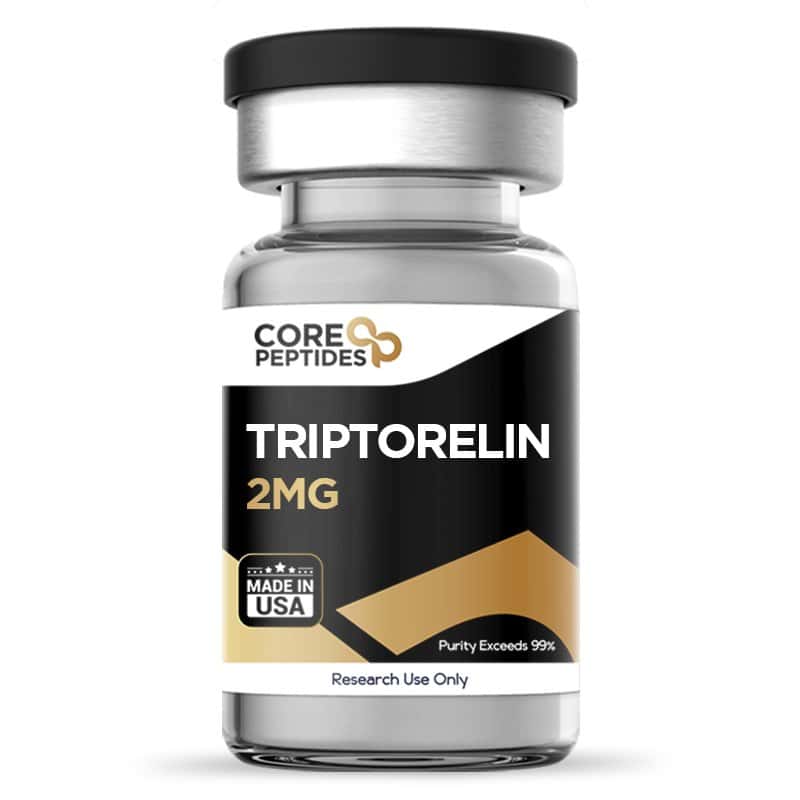


Triptorelin (2mg) – Research Peptide
Triptorelin (2mg) is a synthetic decapeptide analogue of gonadotropin-releasing hormone (GnRH), investigated extensively in endocrine, reproductive and hormone-receptor research.
Its well-characterised interaction with the GnRH receptor makes triptorelin a useful compound for studying pituitary signalling, gonadotropin regulation and downstream sex-steroid pathways.
Triptorelin is classified as a GnRH receptor agonist. Research and regulatory literature describe its initial stimulatory effect on luteinising hormone (LH) and follicle-stimulating hormone (FSH), followed by suppression of gonadotropin secretion during sustained exposure.
The 2mg research format is intended for qualified laboratory and analytical applications. Because triptorelin is a pharmacologically active hormone analogue and is also used clinically in prescription medicines, this research material should not be considered a substitute for an authorised medicinal product.
For research, laboratory and analytical purposes only. Not for human or animal consumption.
What Is Triptorelin?
Triptorelin is a synthetic decapeptide designed as an analogue of naturally occurring gonadotropin-releasing hormone. It binds to and activates GnRH receptors, which are principally involved in regulating pituitary secretion of LH and FSH.
Unlike native GnRH, triptorelin has structural modifications that provide enhanced receptor activity and resistance to enzymatic degradation. Official drug information identifies triptorelin as a synthetic decapeptide GnRH agonist.
Because the GnRH receptor is central to the hypothalamic-pituitary-gonadal axis, triptorelin has become an important research compound for investigating endocrine feedback, reproductive hormone signalling and receptor pharmacology.
Triptorelin (2mg) Product Overview
| Specification | Details |
|---|---|
| Product Name | Triptorelin |
| Quantity | 2mg |
| Peptide Type | Synthetic decapeptide |
| Pharmacological Class | Gonadotropin-releasing hormone receptor agonist |
| Primary Research Focus | GnRH receptor biology, endocrine signalling and reproductive hormone research |
| Molecular Formula | C64H82N18O13 |
| Molecular Weight | Approximately 1311.5 g/mol for the peptide |
| Research Format | Research material |
| Intended Use | Laboratory, analytical and in-vitro research |
PubChem identifies triptorelin as a GnRH receptor agonist and records its molecular formula as C64H82N18O13.
Triptorelin and GnRH Receptor Research
The gonadotropin-releasing hormone receptor (GnRHR) is a key component of reproductive endocrine signalling. GnRH released from the hypothalamus interacts with receptors on pituitary gonadotroph cells, initiating signalling events that regulate LH and FSH secretion.
Triptorelin acts as an agonist at this receptor. Experimental research can therefore use the peptide to investigate receptor activation, ligand-receptor interactions and downstream endocrine signalling.
Research involving triptorelin can also help distinguish the effects of pulsatile versus sustained GnRH-receptor stimulation, an important concept in understanding reproductive hormone regulation.
How Triptorelin Interacts with the GnRH Axis
The hypothalamic-pituitary-gonadal axis involves communication between the hypothalamus, pituitary gland and gonads. GnRH is released from the hypothalamus and stimulates pituitary GnRH receptors.
Triptorelin can activate the same receptor system. Official pharmacology information describes an initial increase in circulating LH and FSH following administration. With chronic and continuous exposure, sustained suppression of LH and FSH and marked reductions in sex-steroid concentrations are observed.
This biphasic pharmacological profile is one of the most important characteristics studied when investigating GnRH agonists.
Initial GnRH-Receptor Stimulation
GnRH agonists such as triptorelin can initially stimulate the GnRH receptor. This can produce a temporary increase in pituitary gonadotropin secretion.
Regulatory information describes an initial surge in LH and FSH, accompanied by increases in sex steroids such as testosterone and oestradiol.
This early stimulatory phase is an important consideration in experimental models examining the temporal response of the hypothalamic-pituitary-gonadal axis.
Triptorelin and Sustained GnRH Signalling
Continuous exposure to a GnRH agonist produces a different endocrine response from physiological pulsatile GnRH signalling. Regulatory pharmacology information indicates that, following sustained administration, LH and FSH secretion decreases and sex-steroid concentrations are markedly reduced.
This phenomenon is commonly described in the scientific literature as GnRH receptor desensitisation or downregulation and forms an important area of endocrine pharmacology research.
Researchers studying this process can investigate receptor signalling, pituitary responsiveness, hormone feedback and changes in downstream endocrine pathways.
Triptorelin and LH Research
Luteinising hormone (LH) is one of the principal gonadotropins produced by the anterior pituitary. It plays an important role in reproductive physiology and steroidogenic signalling.
Because triptorelin activates the GnRH receptor, it can be used in appropriate experimental systems to investigate the regulation of LH secretion and the molecular mechanisms responsible for changes in pituitary responsiveness.
Studies can examine changes in LH concentrations, receptor signalling pathways and downstream endocrine responses under controlled experimental conditions.
Triptorelin and FSH Research
Follicle-stimulating hormone (FSH) is the second major pituitary gonadotropin regulated by GnRH signalling.
Triptorelin research can therefore include investigation of FSH release and the relationship between GnRH receptor activation and pituitary gonadotroph function.
Studying both LH and FSH is useful when investigating the integrated response of the hypothalamic-pituitary-gonadal axis rather than examining a single hormone in isolation.
Triptorelin and Sex-Steroid Research
Changes in LH and FSH signalling can influence downstream sex-steroid pathways. Research involving triptorelin has consequently examined its relationship with hormones including testosterone and oestradiol.
Official prescribing information describes an initial rise in testosterone and oestradiol following GnRH agonist administration, followed by marked reductions in sex steroids after sustained exposure.
These effects make triptorelin relevant to experimental research investigating endocrine feedback loops and hormone-dependent biological systems.
Triptorelin Structure
Triptorelin is a decapeptide, meaning that the peptide portion contains ten amino-acid residues. It is structurally related to native GnRH but incorporates modifications that alter its pharmacological properties.
PubChem records triptorelin with the molecular formula C64H82N18O13.
For comparison, regulatory information for triptorelin pamoate identifies the pamoate salt as having a molecular weight of approximately 1699.9 g/mol, illustrating why researchers should distinguish the free peptide from its salt or pharmaceutical formulation when interpreting analytical data.
Triptorelin vs Native GnRH
| Feature | Native GnRH | Triptorelin |
|---|---|---|
| Peptide type | Endogenous hypothalamic hormone | Synthetic GnRH analogue |
| Length | 10 amino acids | 10 amino acids |
| Receptor activity | GnRH receptor agonist | GnRH receptor agonist |
| Research relevance | Physiological GnRH signalling | GnRH receptor pharmacology and sustained agonist signalling |
Triptorelin is therefore not simply a replacement for native GnRH. Its structural modifications give it a distinct pharmacological profile, making it particularly relevant to research into prolonged GnRH-receptor activation.
Triptorelin and Endocrine Research
Triptorelin provides a useful experimental tool for studying endocrine regulation because its effects can be traced across multiple levels of the hypothalamic-pituitary-gonadal axis.
Research applications may include investigation of:
- GnRH receptor activation.
- Pituitary gonadotroph signalling.
- LH and FSH secretion.
- Sex-steroid regulation.
- Endocrine feedback mechanisms.
- Receptor desensitisation.
- Hormone-dependent cellular responses.
- Reproductive endocrinology.
- Peptide-receptor pharmacology.
- Structure-activity relationships of GnRH analogues.
Triptorelin in Reproductive Biology Research
The GnRH receptor is fundamental to reproductive endocrine function, which makes triptorelin relevant to laboratory research involving reproductive biology.
Researchers may use GnRH agonists to examine how changes in receptor stimulation influence gonadotropin secretion and downstream hormone pathways. Experimental models can include isolated cells, tissue systems and other controlled biological models.
Results depend on factors including exposure conditions, experimental model, receptor expression and duration of stimulation, so findings should always be interpreted within the context of the specific study.
Triptorelin and Pharmacology Research
As a well-characterised GnRH agonist, triptorelin can be studied in the context of receptor pharmacology.
Relevant laboratory investigations may examine receptor affinity, agonist activity, signalling kinetics, receptor internalisation and changes in cellular responsiveness following repeated stimulation.
Comparative studies may also evaluate triptorelin alongside other GnRH agonists or modified GnRH analogues to investigate how structural differences affect receptor-mediated activity.
Triptorelin and Cancer Research
GnRH agonists have been investigated extensively in hormone-dependent cancer research. Triptorelin is a clinically established GnRH agonist, and official US prescribing information for TRELSTAR identifies triptorelin pamoate as a treatment for advanced prostate cancer.
For research purposes, this makes triptorelin relevant to studies examining androgen-dependent signalling, endocrine manipulation and hormone-responsive tumour biology.
However, a research-grade triptorelin product should not be presented as an authorised cancer treatment. Therapeutic products, formulations, indications and administration requirements are subject to regulatory approval and medical supervision.
Triptorelin and Central Precocious Puberty Research
Triptorelin has also been investigated clinically in the context of central precocious puberty. The FDA-approved extended-release product TRIPTODUR is indicated for children aged two years and older with this condition.
This clinical application reflects the ability of sustained GnRH agonist exposure to suppress the reproductive hormone axis following the initial stimulatory phase.
Clinical formulations should not be confused with a research-grade 2mg peptide preparation. Clinical use requires an authorised product, appropriate medical assessment and professional supervision.
Analytical Research with Triptorelin
Analytical characterisation is important when working with synthetic peptides. Depending on the experimental objective, researchers may use several complementary methods to verify peptide identity and assess sample quality.
- HPLC: Used to examine chromatographic purity and related substances.
- Mass spectrometry: Used to confirm molecular mass and support compound identification.
- LC-MS: Combines chromatographic separation with mass-based detection.
- Receptor-binding assays: Used to investigate peptide-receptor interactions in suitable experimental systems.
- Cell-based assays: Used to assess biological responses under controlled laboratory conditions.
Researchers should use validated analytical methods and consult the applicable batch documentation when characterising a research material.
Research Applications of Triptorelin (2mg)
Qualified researchers may investigate Triptorelin (2mg) in areas including:
- GnRH receptor biology.
- Reproductive endocrinology.
- Hypothalamic-pituitary-gonadal axis research.
- LH and FSH signalling.
- Sex-steroid regulation.
- Endocrine feedback mechanisms.
- Peptide-receptor pharmacology.
- GnRH agonist structure-activity studies.
- Receptor desensitisation research.
- Hormone-dependent cellular models.
- Endocrine oncology research.
- Analytical peptide research.
These are research applications rather than recommendations for human or veterinary treatment.
Triptorelin (2mg) Research Summary
| Research Characteristic | Information |
|---|---|
| Compound | Triptorelin |
| Quantity | 2mg |
| Compound Class | Synthetic GnRH analogue |
| Peptide Length | 10 amino acids |
| Pharmacological Class | GnRH receptor agonist |
| Molecular Formula | C64H82N18O13 |
| Molecular Weight | Approximately 1311.5 g/mol for the peptide |
| Primary Research Areas | Endocrine signalling, GnRH receptor biology and reproductive research |
| Research Format | Research material |
| Intended Use | Laboratory, analytical and in-vitro research |
Triptorelin’s identity and classification as a GnRH receptor agonist are supported by FDA and PubChem records.
Frequently Asked Questions About Triptorelin (2mg)
What is Triptorelin?
Triptorelin is a synthetic decapeptide analogue of gonadotropin-releasing hormone (GnRH) and acts as a GnRH receptor agonist.
What is Triptorelin studied for?
Research involving triptorelin includes GnRH receptor biology, pituitary signalling, LH and FSH regulation, reproductive endocrinology, endocrine feedback and hormone-dependent cellular research.
How does Triptorelin affect GnRH signalling?
Triptorelin activates GnRH receptors. Official pharmacology information describes an initial increase in LH and FSH followed by sustained suppression of gonadotropin secretion during chronic continuous exposure.
Is Triptorelin the same as GnRH?
No. Triptorelin is a synthetic analogue of naturally occurring GnRH. Although both interact with the GnRH receptor, their structures and pharmacological characteristics differ.
What is the molecular formula of Triptorelin?
PubChem lists the molecular formula of triptorelin as C64H82N18O13.
How many amino acids are in Triptorelin?
Triptorelin is a decapeptide, meaning it contains ten amino-acid residues.
Is Triptorelin a GnRH agonist?
Yes. FDA and other official drug information classify triptorelin as a synthetic GnRH receptor agonist.
Is Triptorelin used clinically?
Yes. Authorised triptorelin medicines are used clinically for specific indications. For example, current US prescribing information identifies TRELSTAR for advanced prostate cancer and TRIPTODUR for central precocious puberty.
Is the 2mg research product a prescription medicine?
A research-grade 2mg preparation should not be confused with an authorised medicinal formulation. Clinical triptorelin products have specific formulations, strengths, indications and professional administration requirements.
Can Triptorelin (2mg) be used for self-administration?
No. This research material is intended for qualified laboratory and analytical research and is not intended for human or animal consumption or self-administration.
Laboratory Handling and Storage
Researchers should follow the supplier’s current product documentation and batch-specific Certificate of Analysis for exact storage and handling requirements.
- Keep the research material in its original labelled container.
- Follow the storage conditions specified in the applicable product documentation.
- Protect the material from unnecessary environmental exposure.
- Minimise unnecessary temperature fluctuations.
- Use appropriate laboratory protective equipment when handling the material.
- Prevent contamination during laboratory work.
- Maintain suitable batch and experimental records.
- Dispose of research material according to applicable institutional procedures.
No dosing, administration or self-use instructions are provided because this product is intended for laboratory research rather than human or veterinary use.
Important Research Disclaimer
Triptorelin (2mg) is supplied strictly for research, laboratory and analytical purposes.
This product is not intended for human or animal consumption, self-administration, diagnosis, treatment, cure or prevention of any disease. Triptorelin is a biologically active GnRH agonist and authorised triptorelin medicines are subject to medical supervision and regulatory requirements.
References to endocrine signalling, prostate cancer, central precocious puberty, reproductive hormones or other biological processes describe established research or clinical pharmacology and should not be interpreted as a therapeutic claim for this research material.
Researchers are responsible for complying with all applicable legislation, institutional requirements, laboratory safety procedures and appropriate handling protocols when working with Triptorelin.
For research use only. Not for human or animal consumption.
Be the first to review “Triptorelin (2mg)”
Related products

Peptides for Sale

Peptides for Sale
Peptides for Sale
Peptides for Sale

Peptides for Sale

Peptides for Sale
Peptides for Sale

Peptides for Sale
Reviews
There are no reviews yet.