
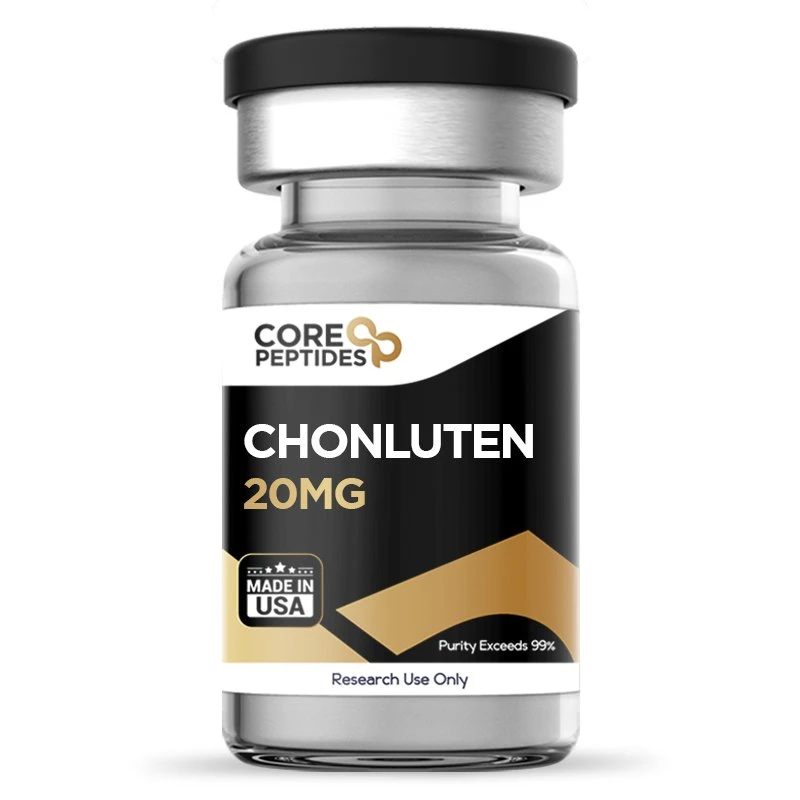


Chonluten (20mg) – Research Peptide
Chonluten (20mg) is a synthetic short-chain peptide also known as EDG tripeptide or T-34. It consists of the three-amino-acid sequence Glu-Asp-Gly (glutamic acid, aspartic acid and glycine) and has been investigated in experimental research involving respiratory biology, bronchial tissue, cellular regulation, inflammation and tissue-specific peptide bioregulation.
The referenced product is supplied as a 20mg lyophilised powder with a stated purity of >99%. Core Peptides identifies Chonluten as a research peptide and describes its primary research interest in relation to the respiratory system, with additional investigation involving cellular and gastrointestinal models.
Research into Chonluten remains experimental. Available evidence includes laboratory and preclinical studies investigating cellular responses, inflammation-related pathways and tissue-specific biological processes. These findings do not establish Chonluten as an approved medicine or clinically validated treatment for respiratory, gastrointestinal or other diseases.
What Is Chonluten?
Chonluten is an ultra-short synthetic tripeptide with the sequence Glu-Asp-Gly (EDG). It is also referred to in research literature as T-34. The peptide belongs to the broader field of short peptide bioregulators investigated for their potential influence on cellular and tissue-specific processes.
Unlike larger therapeutic peptides and proteins, Chonluten contains only three amino acids. Its simple molecular structure makes it an interesting experimental compound for researchers studying the relationship between short peptide sequences and biological regulation.
Research interest has centred particularly on respiratory and bronchial biology. Experimental studies have also examined potential relationships with inflammatory signalling, cellular proliferation, mucosal tissue and mechanisms associated with cellular ageing.
Chonluten (20mg) Product Highlights
- Product name: Chonluten
- Alternative names: EDG, T-34, EDG tripeptide
- Quantity: 20mg
- Peptide classification: Synthetic tripeptide
- Amino-acid sequence: Glu-Asp-Gly
- Peptide length: 3 amino acids
- Form: Lyophilised powder
- Stated purity: >99%
- Molecular formula: C11H17N3O8
- Molecular weight: Approximately 319.27 g/mol
- Primary research area: Respiratory and bronchial biology
- Additional research areas: Cellular regulation, inflammation, mucosal biology and gastrointestinal research
- Research status: Experimental / preclinical
- Intended use: Laboratory and analytical research only
The product specifications are based on the referenced Core Peptides product listing.
Chonluten Chemical Profile
| Property | Specification |
|---|---|
| Common name | Chonluten |
| Alternative designation | EDG / T-34 |
| Sequence | Glu-Asp-Gly |
| Peptide length | 3 amino acids |
| Classification | Synthetic tripeptide |
| Molecular formula | C11H17N3O8 |
| Molecular weight | Approximately 319.27 g/mol |
| Quantity | 20mg |
| Physical form | Lyophilised powder |
| Stated purity | >99% |
The molecular information above corresponds with the Core Peptides listing.
Chonluten and Respiratory Research
Chonluten has primarily attracted research interest because of its proposed relationship with respiratory and bronchopulmonary tissues. The respiratory system contains specialised epithelial and mucosal tissues that contribute to airway protection and normal pulmonary function.
Experimental research has investigated whether short peptide bioregulators such as Chonluten can influence cellular processes within respiratory tissues. Areas of interest include inflammatory responses, cell proliferation and the functional state of bronchial mucosal cells.
These investigations may be relevant to researchers studying airway biology, epithelial-cell regulation and the molecular mechanisms involved in respiratory tissue maintenance.
However, experimental findings should not be interpreted as proof that Chonluten can prevent, treat or cure respiratory disease in humans.
Chonluten and Bronchial Mucosa Research
The bronchial mucosa forms an important protective interface within the respiratory tract. Its epithelial cells and associated structures contribute to airway defence and interact continuously with inhaled environmental factors.
According to the referenced product literature, Chonluten has been investigated for its potential relationship with the normalisation of bronchial mucosal cell function. Research in this area is intended to improve understanding of how short peptides may interact with respiratory tissue at a cellular level.
Such research may involve evaluating changes in cellular morphology, proliferation, inflammatory markers and gene-expression profiles.
The concept of mucosal normalisation remains a research hypothesis and should not be presented as an established therapeutic effect.
Chonluten and Inflammation Research
Inflammation is a complex biological response involving immune cells, cytokines, signalling molecules and changes in tissue behaviour. Understanding how inflammation is regulated is important across respiratory and gastrointestinal research.
Chonluten has been investigated in experimental systems involving inflammatory responses. Research has explored whether the peptide can influence cellular pathways associated with inflammation and tissue homeostasis.
Some indexed experimental literature has examined Chonluten in cell-based models involving monocytes and macrophages, providing additional interest in its potential immunomodulatory properties.
These findings remain preclinical and do not establish Chonluten as an anti-inflammatory medicine.
Chonluten and Cellular Proliferation
Cell proliferation refers to the process through which cells divide and increase in number. Controlled proliferation is important for tissue maintenance, regeneration and normal development, while excessive or insufficient proliferation can contribute to pathological processes.
Research into Chonluten has examined its potential influence on proliferation-related cellular mechanisms. These studies may help researchers investigate whether short peptide sequences can modify cellular responses under defined experimental conditions.
Results from cell-based research must be interpreted within the specific experimental model used and cannot automatically be translated into human therapeutic effects.
Chonluten and Cellular Ageing Research
Cellular ageing is associated with changes in proliferation, gene expression, metabolism and responses to environmental stress. Peptide bioregulators have attracted scientific interest as experimental tools for investigating these processes.
Chonluten has been discussed in connection with research into mechanisms that may influence cellular senescence and the maintenance of tissue-specific cellular function.
Current evidence remains insufficient to establish Chonluten as an anti-ageing treatment or to demonstrate a clinically meaningful effect on human longevity.
Chonluten and Immunomodulation Research
Immunomodulation describes the alteration or regulation of immune-system activity. Respiratory tissues are continually exposed to environmental particles and microorganisms, making immune regulation an important area of pulmonary research.
Experimental investigations of Chonluten have considered its potential relationship with immune-cell responses and inflammatory signalling. Research involving monocyte and macrophage models has contributed to interest in the peptide’s possible cellular effects.
These observations provide research directions rather than evidence of an established immunomodulatory treatment.
Chonluten and Gene-Expression Research
Short peptides are being investigated for their possible relationships with gene-expression regulation. This field examines how cells control the production of proteins and other molecules in response to internal and external signals.
Chonluten research has proposed that the peptide may influence cellular regulatory processes involved in maintaining tissue-specific function. Researchers may investigate such hypotheses by measuring changes in gene-expression markers, transcriptional activity and downstream cellular proteins.
Any proposed mechanism should be regarded as experimental unless supported by robust biochemical and clinical evidence.
Chonluten and Respiratory Tissue Biology
Respiratory tissue contains several specialised cell types, including epithelial cells, immune cells, fibroblasts and other supporting populations. Maintaining appropriate interactions between these cells is essential for normal tissue structure.
Chonluten is of interest in respiratory research because of its proposed tissue-specific activity. Experimental work has focused on whether the peptide can influence biological processes within bronchial and pulmonary models.
Researchers may use such models to investigate cell proliferation, inflammatory signalling, oxidative-stress responses, epithelial integrity and gene-expression changes.
Chonluten and Gastrointestinal Research
Although respiratory biology is the principal area associated with Chonluten, the peptide has also been investigated in relation to the gastrointestinal tract.
The gastrointestinal system contains extensive epithelial and mucosal tissues with complex relationships between epithelial cells, immune cells and connective-tissue structures. Short peptide bioregulators have been investigated in experimental models to explore whether they can influence these tissue-specific processes.
The available evidence does not establish Chonluten as an approved treatment for gastrointestinal disease, digestive disorders or inflammatory conditions.
Chonluten as an Experimental Peptide Bioregulator
Chonluten belongs to a research tradition involving very short peptides referred to as peptide bioregulators. These compounds are typically investigated for potential effects on tissue-specific cellular processes rather than as conventional receptor-targeting pharmaceuticals.
With only three amino acids, Chonluten provides a relatively simple molecular system for studying the relationship between peptide sequence and biological activity.
Research into this class of peptides includes questions concerning gene expression, cellular differentiation, proliferation, inflammatory signalling and tissue homeostasis.
Chonluten Research Applications
Chonluten may be relevant to laboratory research in several areas, including:
- Respiratory biology: Investigation of cellular and molecular processes in pulmonary and bronchial tissues.
- Bronchial epithelial research: Study of airway mucosal-cell behaviour and regulation.
- Inflammation research: Examination of inflammatory signalling and cellular responses.
- Immunology: Investigation of monocyte, macrophage and other immune-cell models.
- Cell proliferation: Study of peptide-associated changes in cellular growth and division.
- Cellular ageing: Investigation of senescence-related molecular processes.
- Gene-expression research: Examination of transcriptional and regulatory responses.
- Gastrointestinal research: Investigation of peptide interactions with gastrointestinal tissue models.
- Peptide bioregulator research: Study of ultra-short peptide sequences and tissue-specific biological activity.
Chonluten (20mg) for Laboratory Research
The 20mg specification represents the quantity of peptide supplied in the product. It should not be interpreted as a recommended human dose, treatment quantity or clinical protocol.
The product is supplied as a lyophilised powder, a format commonly used for laboratory peptide preparations. Researchers should follow the supplier’s batch-specific documentation and their own validated laboratory procedures when handling experimental peptide materials.
| Product Attribute | Specification |
|---|---|
| Peptide | Chonluten |
| Sequence | Glu-Asp-Gly (EDG) |
| Quantity | 20mg |
| Peptide length | 3 amino acids |
| Form | Lyophilised powder |
| Stated purity | >99% |
| Molecular formula | C11H17N3O8 |
| Molecular weight | Approximately 319.27 g/mol |
The product specifications are based on the Core Peptides listing. :contentReference[oaicite:4]{index=4}
Understanding Lyophilised Chonluten
Lyophilisation, commonly known as freeze-drying, is frequently used for peptide research materials. The process removes water under controlled conditions to produce a dry preparation that can be stored and handled according to appropriate laboratory requirements.
Chonluten (20mg) is supplied in this lyophilised form. Researchers should consult the relevant product documentation for storage requirements and should use appropriate laboratory procedures when handling the material.
Chonluten and Current Research Evidence
The scientific literature surrounding Chonluten is primarily experimental. An evidence review identifies Chonluten as a synthetic Glu-Asp-Gly tripeptide and notes cell-culture research examining inflammation-related and proliferation-related effects in monocyte and macrophage models. The same review reports that there are no Phase 1 or later human clinical trials establishing its safety or efficacy.
Additional research-oriented sources describe investigations involving bronchopulmonary and gastrointestinal models, but many proposed mechanisms remain hypotheses requiring further validation.
This distinction is important when evaluating peptide research. Findings observed in cell cultures or other experimental systems can provide useful scientific insights but do not by themselves demonstrate efficacy in humans.
Chonluten and Respiratory Disease Research
Because Chonluten has been investigated in respiratory models, it is sometimes discussed in relation to conditions involving chronic inflammation or airway dysfunction.
However, a research interest in a disease pathway is not equivalent to a demonstrated clinical treatment effect. There is currently insufficient high-quality human evidence to establish Chonluten as a treatment for asthma, chronic obstructive pulmonary disease, bronchitis, pulmonary inflammation or other respiratory disorders.
Researchers should therefore treat these areas as potential subjects for further investigation rather than established therapeutic applications.
Chonluten and Oxidative-Stress Research
Oxidative stress occurs when the production of reactive oxygen species exceeds the ability of biological systems to neutralise or manage them. Oxidative stress is relevant to many areas of respiratory and cellular research.
Peptide bioregulators have been investigated for potential relationships with cellular responses to oxidative stress. Chonluten may therefore be relevant to experimental studies examining antioxidant pathways, cellular stress markers and tissue responses.
Further research is required to determine the molecular mechanisms involved and whether observations in laboratory models have any meaningful clinical relevance.
Chonluten and Mucosal Biology
Mucosal tissues form protective interfaces throughout the respiratory and gastrointestinal systems. These tissues contain epithelial cells and other specialised cell populations that contribute to barrier function and local immune responses.
Research into Chonluten has included discussion of its potential relationship with mucosal-cell function. This makes the peptide relevant to laboratory studies examining epithelial integrity, cell proliferation and tissue-specific regulation.
Such research remains experimental and should not be interpreted as evidence of a clinically established mucosal-healing effect.
Chonluten Compared with Other Short Peptides
Chonluten is structurally distinct from many commonly researched peptides because of its extremely short sequence. Its Glu-Asp-Gly structure contains only three amino acids.
| Feature | Chonluten |
|---|---|
| Peptide type | Synthetic tripeptide |
| Sequence | Glu-Asp-Gly |
| Alternative designation | EDG / T-34 |
| Length | 3 amino acids |
| Primary research focus | Respiratory and bronchial biology |
| Additional research areas | Inflammation, immune-cell biology, cellular ageing and gastrointestinal research |
| Research status | Experimental / preclinical |
Chonluten and Analytical Research Quality
Analytical characterisation is an important part of peptide research. Researchers need to establish the identity and purity of an experimental compound before using it in controlled laboratory studies.
Common analytical approaches for peptide characterisation include:
- High-performance liquid chromatography (HPLC): Used to assess chromatographic purity.
- Mass spectrometry: Used to support molecular identity and molecular-weight confirmation.
- Certificate of Analysis: Provides batch-specific analytical information where available.
- Lot traceability: Helps researchers maintain consistency between experimental batches.
The referenced Core Peptides product page provides product documentation and a Certificate of Analysis section for Chonluten.
Why Researchers Study Chonluten
Chonluten provides researchers with a defined ultra-short peptide sequence that can be examined in controlled cellular and molecular models.
Its association with respiratory tissue research makes it particularly relevant to investigators studying bronchial epithelial cells, inflammation, cellular proliferation and tissue-specific gene regulation.
The peptide can also be considered within the wider study of short bioregulatory peptides and their potential relationships with cellular homeostasis and ageing.
Frequently Asked Questions About Chonluten (20mg)
What is Chonluten?
Chonluten is a synthetic tripeptide commonly identified as Glu-Asp-Gly (EDG) and also known as T-34. It has been investigated in experimental research involving respiratory and cellular biology.
What is the sequence of Chonluten?
The commonly reported sequence is Glu-Asp-Gly (EDG).
How many amino acids are in Chonluten?
Chonluten is a tripeptide containing three amino acids.
What is Chonluten studied for?
Research has examined Chonluten in areas including respiratory biology, bronchial mucosal cells, inflammation, immune-cell responses, cellular proliferation, ageing and gastrointestinal tissue models.
What is Chonluten (20mg)?
Chonluten (20mg) is a research preparation containing 20mg of Chonluten in lyophilised powder form.
What is the stated purity of Chonluten?
The referenced Core Peptides listing states a purity of greater than 99%.
What is the molecular weight of Chonluten?
The molecular weight listed for Chonluten is approximately 319.27 g/mol.
Is Chonluten an approved medicine?
No. Chonluten is an experimental research peptide and is not established as an approved medicinal product.
Is Chonluten clinically proven for respiratory disease?
No. Current evidence does not establish Chonluten as a clinically proven treatment for respiratory disease. Available research is predominantly experimental, and an evidence review reports no Phase 1 or later human clinical trials.
Is Chonluten an anti-inflammatory medicine?
No. Although inflammatory pathways have been investigated in experimental Chonluten research, this does not establish the peptide as an approved anti-inflammatory medicine.
What form is Chonluten supplied in?
The referenced product is supplied as a lyophilised powder.
Does 20mg represent a human dose?
No. The 20mg specification refers to the amount of research material supplied and should not be interpreted as a recommended human dosage.
Why is Chonluten interesting to researchers?
Its defined three-amino-acid sequence and association with respiratory, inflammatory and cellular-regulation research make Chonluten an interesting experimental compound for peptide biology.
Limitations of Current Chonluten Research
Researchers evaluating Chonluten should consider several limitations in the current evidence base:
- Limited human evidence: There is no established body of controlled human clinical evidence demonstrating safety or efficacy.
- Predominantly preclinical research: Much of the available evidence comes from laboratory and experimental models.
- Limited clinical translation: Results from cell-based studies cannot automatically be extrapolated to human outcomes.
- Mechanistic uncertainty: Proposed mechanisms require further biochemical and molecular validation.
- No established therapeutic protocol: There is no clinically validated treatment regimen for human use.
- Long-term safety uncertainty: Long-term effects in humans have not been adequately characterised.
An independent evidence review categorises Chonluten as a research-only tripeptide and specifically notes the absence of Phase 1 or later human clinical trials.
Chonluten (20mg) Research Summary
Chonluten (20mg) is a synthetic ultra-short peptide consisting of the sequence Glu-Asp-Gly (EDG). Also known as T-34, it belongs to the broader field of short peptide bioregulator research.
The peptide has attracted particular research interest in respiratory and bronchial biology, with additional experimental work examining inflammation, immune-cell responses, cellular proliferation, cellular ageing and gastrointestinal tissue models.
The referenced product contains 20mg of lyophilised Chonluten powder with a stated purity above 99%. Its molecular formula is C11H17N3O8, with a molecular weight of approximately 319.27 g/mol.
Although Chonluten has generated scientific interest, the evidence remains experimental. Current literature does not establish the compound as an approved treatment for respiratory disease, inflammation, gastrointestinal disorders or other medical conditions. Researchers should therefore distinguish clearly between experimental observations and clinically validated effects.
Research-Use Disclaimer
Chonluten (20mg) is intended for laboratory, research and analytical use only. It is not a medicine, dietary supplement, food product or approved therapeutic treatment.
The information in this product description is provided for scientific and educational purposes and summarises areas of experimental research. It should not be interpreted as a claim that Chonluten can diagnose, treat, cure or prevent any disease or medical condition.
Current evidence concerning Chonluten remains predominantly experimental and preclinical. Human clinical evidence establishing its safety, efficacy, pharmacokinetics or therapeutic dosing is not currently sufficient.
This description does not provide instructions for human administration, dosing, injection, reconstitution for human use or self-experimentation. Researchers should consult relevant scientific literature, batch-specific analytical documentation, institutional procedures and applicable laws and regulations when working with experimental peptide materials.
Be the first to review “Chonluten (20mg)”
Related products
Peptides for Sale
Peptides for Sale
Peptides for Sale
Peptides for Sale

Peptides for Sale
Peptides for Sale
Peptide Blends for Sale
Peptides for Sale
Reviews
There are no reviews yet.