
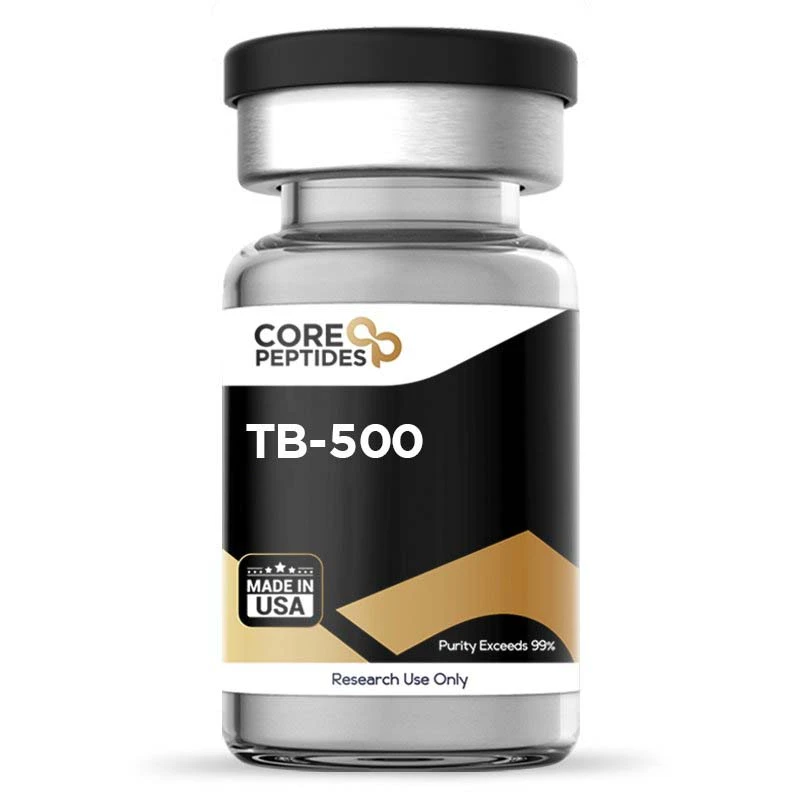
TB-500 (Thymosin Beta 4) (5mg / 10mg)
TB-500 (Thymosin Beta 4) (5mg / 10mg) is a synthetic peptide research material associated with thymosin beta-4 (Tβ4), a naturally occurring peptide involved in cellular processes such as actin regulation, cell migration, angiogenesis and tissue remodelling.
TB-500 has attracted considerable interest in peptide research because of its relationship to the actin-binding region of thymosin beta-4 and the broader research surrounding tissue repair and regeneration.
TB-500 is commonly described in research literature and commercial research settings as an analogue or fragment related to thymosin beta-4. Importantly, TB-500 should not automatically be treated as chemically identical to full-length thymosin beta-4.
Terminology can vary between suppliers, so researchers should verify the exact molecular identity, sequence, molecular mass and batch-specific analytical documentation supplied with their material.
The 5mg / 10mg formats provide researchers with flexible quantities for laboratory, analytical, biochemical and peptide research applications. TB-500 is particularly relevant to investigations involving cell migration, cytoskeletal dynamics, tissue-repair pathways, angiogenesis, inflammation and extracellular matrix remodelling.
For research and laboratory use only. Not for human or animal consumption.
What Is TB-500?
TB-500 is a synthetic peptide commonly associated with the biologically active region of thymosin beta-4. Thymosin beta-4 is a naturally occurring 43-amino-acid peptide found in many tissues and body fluids and is recognised as an important actin-sequestering molecule.
Research into Tβ4 has explored its role in cell migration, wound repair, angiogenesis, inflammation, apoptosis and tissue regeneration.
In many research contexts, TB-500 is identified as an N-acetylated fragment corresponding to residues 17–23 of thymosin beta-4, commonly represented as Ac-LKKTETQ.
However, because the name “TB-500” is not consistently used across all commercial materials, researchers should confirm the exact composition of the specific product rather than assuming that every TB-500-labelled material represents the same molecular entity.
This distinction is scientifically important because a significant proportion of published research concerns full-length thymosin beta-4, rather than the shorter TB-500 fragment.
A 2026 scoping review found that most of the available literature evaluated thymosin beta-4, while direct TB-500 evidence was comparatively limited.
TB-500 Product Specifications
| Specification | Details |
|---|---|
| Product Name | TB-500 |
| Associated Peptide | Thymosin Beta 4 |
| Available Quantities | 5mg / 10mg |
| Peptide Classification | Synthetic peptide / thymosin beta-4-related research material |
| Commonly Reported Fragment | Ac-LKKTETQ |
| Parent Molecule | Thymosin beta-4 (Tβ4) |
| Research Areas | Cell migration, tissue repair, angiogenesis and regenerative biology |
| Research Format | Peptide research material |
| Intended Use | Laboratory, analytical and scientific research |
Exact specifications, purity, molecular identity and storage requirements should always be confirmed using the current product documentation and batch-specific Certificate of Analysis supplied with the material.
TB-500 and Thymosin Beta 4: Understanding the Difference
The terms TB-500 and thymosin beta-4 are frequently used together, but they should not be assumed to mean exactly the same molecule.
Thymosin beta-4 is a naturally occurring 43-amino-acid peptide. It is an abundant intracellular and extracellular peptide that binds monomeric G-actin and has been investigated extensively in relation to cytoskeletal organisation and tissue repair.
TB-500, by contrast, is commonly described as a synthetic peptide related to the actin-binding region of Tβ4. The frequently reported TB-500 sequence is Ac-LKKTETQ, corresponding to residues 17–23 of the parent peptide.
This distinction matters when evaluating research. Evidence demonstrating a biological effect with full-length Tβ4 should not automatically be presented as evidence that an identical effect has been established for TB-500.
How Does TB-500 Relate to Actin?
One of the most important areas of thymosin beta-4 research concerns actin regulation. Actin is a structural protein involved in the cytoskeleton and plays a central role in processes including cell shape, movement, intracellular transport and tissue organisation.
Full-length thymosin beta-4 is recognised as a major G-actin-sequestering peptide. By binding monomeric actin, Tβ4 influences the availability of actin for polymerisation and therefore participates in the regulation of cytoskeletal dynamics.
The commonly reported TB-500 fragment contains the central LKKTET motif associated with the actin-binding region of Tβ4. This provides the biochemical rationale for investigating TB-500 in research involving actin-associated cellular processes.
However, the shorter fragment does not contain the complete sequence of full-length Tβ4. Consequently, researchers should distinguish between mechanisms established for the complete protein and mechanisms directly demonstrated for the TB-500 fragment.
TB-500 and Cell Migration Research
Cell migration is a fundamental biological process involved in tissue development, immune responses and wound repair. Cells must change shape, reorganise their cytoskeleton and move through surrounding tissue during many forms of biological repair.
Research into thymosin beta-4 has demonstrated effects on cellular migration, particularly in models involving epithelial and endothelial cells. These findings have contributed to interest in Tβ4 as a potential regulator of tissue repair.
Because TB-500 is associated with the actin-binding region of Tβ4, it is also investigated in research relating to cytoskeletal organisation and cell movement. Nevertheless, the strongest published evidence for cell-migration and wound-healing activity remains associated with the parent thymosin beta-4 molecule rather than direct human studies of TB-500.
TB-500 and Tissue Repair Research
Thymosin beta-4 has been extensively studied in tissue-repair models. Research has examined its effects in skin, corneal tissue and other injury models, with findings involving cell migration, angiogenesis, inflammation and tissue remodelling.
In preclinical dermal models, Tβ4 has been associated with faster wound closure and increased cellular processes involved in repair. A review of experimental research reported effects involving epithelial-cell migration, angiogenesis, cell survival, inflammation and scar formation.
These findings provide the scientific background for continued interest in TB-500-related research. They should not, however, be interpreted as proof that commercially supplied TB-500 provides the same effects in humans.
TB-500 and Angiogenesis Research
Angiogenesis refers to the formation of new blood vessels from existing vascular structures. It is an important part of normal tissue repair because newly developing tissue requires an adequate blood supply.
Thymosin beta-4 has been investigated for its relationship with angiogenic pathways. Preclinical research has reported increased blood-vessel formation in several tissue-repair models, while reviews describe angiogenesis as one of the biological activities associated with Tβ4.
This makes angiogenesis an important area of research for laboratories studying thymosin beta-4 and related peptide materials.
Because angiogenesis is a complex biological process with both beneficial and pathological roles, findings involving vascular growth should be interpreted within the specific experimental model rather than being translated directly into therapeutic claims.
TB-500 and Inflammation Research
Inflammation is an important component of the body’s response to tissue injury. Controlled inflammatory signalling contributes to normal repair, while prolonged or excessive inflammation can interfere with tissue recovery.
Research into thymosin beta-4 has identified potential effects on inflammatory signalling and cytokine activity. Reviews describe anti-inflammatory and anti-apoptotic properties among the biological activities observed in experimental models.
These findings have contributed to research interest in Tβ4-related peptides for understanding the interaction between inflammation and tissue regeneration.
Importantly, laboratory observations should not be interpreted as evidence that TB-500 is an approved anti-inflammatory treatment.
TB-500 and Extracellular Matrix Research
The extracellular matrix (ECM) provides structural support to cells and participates in signalling processes that influence tissue organisation and repair.
Thymosin beta-4 research has examined interactions between cellular migration, angiogenesis, extracellular matrix remodelling and tissue regeneration. Some experimental studies have also investigated collagen deposition and other matrix-related changes during wound repair.
These areas provide a useful framework for laboratory studies investigating how thymosin beta-4-related peptides may influence tissue-remodelling pathways.
Potential Research Applications of TB-500 (5mg / 10mg)
TB-500 (5mg / 10mg) may be of interest to qualified researchers working in several areas of peptide and regenerative biology.
- Cell migration research: Investigation of peptide-related effects on cellular movement and cytoskeletal dynamics.
- Actin research: Study of actin-binding and actin-associated cellular processes.
- Tissue repair research: Investigation of molecular pathways involved in tissue regeneration.
- Wound-healing research: Experimental investigation of cellular mechanisms associated with tissue repair.
- Angiogenesis research: Study of pathways associated with endothelial-cell activity and blood-vessel formation.
- Inflammation research: Investigation of peptide interactions with inflammatory signalling pathways.
- Extracellular matrix research: Examination of tissue remodelling and matrix-associated processes.
- Regenerative biology: Investigation of cellular pathways involved in repair and regeneration.
- Comparative peptide research: Comparison of TB-500-related materials with full-length thymosin beta-4.
- Analytical research: Molecular identification, purity assessment and stability testing.
TB-500 in Wound-Healing Research
Wound healing is one of the most extensively investigated areas of thymosin beta-4 research. Experimental studies have evaluated Tβ4 in models of dermal injury, burns, diabetic wounds and other forms of tissue damage.
Researchers have proposed several interconnected mechanisms, including enhanced cell migration, increased angiogenesis, modulation of inflammatory responses and effects on cell survival. These processes collectively contribute to tissue repair in experimental models.
Human studies involving full-length thymosin beta-4 have also been reported in selected wound-healing contexts. A PubMed-indexed review describes phase 2 clinical studies involving pressure ulcers and stasis ulcers in which Tβ4 was investigated for its potential effect on healing.
These human findings should not be used to imply that the commercially available TB-500 fragment has established clinical efficacy, as the identity and formulation of the investigated material are important considerations.
TB-500 and Musculoskeletal Research
TB-500 is frequently discussed in connection with muscle, tendon, ligament and other musculoskeletal research. However, the evidence base requires careful interpretation.
A 2026 scoping review examining thymosin beta-4 and TB-500 identified 80 relevant studies but found that most evaluated thymosin beta-4 rather than TB-500. Direct musculoskeletal evidence was comparatively sparse, and only one included study directly evaluated TB-500.
This distinction is important for responsible scientific communication. While biological mechanisms associated with Tβ4 may provide a rationale for further research into musculoskeletal repair, current evidence does not establish TB-500 as an approved treatment for tendon, ligament, muscle, cartilage or other injuries.
TB-500 and Regenerative Biology
Regenerative biology investigates how cells respond to injury and how tissues restore structure and function. Thymosin beta-4 is of interest in this field because its biological activities intersect with several fundamental processes involved in repair.
Research has described Tβ4-related effects involving cell migration, angiogenesis, inflammation, apoptosis, stem-cell activity and tissue remodelling.
These multiple biological activities make Tβ4 a useful research subject for laboratories investigating the interaction between cytoskeletal regulation and tissue repair.
TB-500 provides an additional research model for investigating the activity of a shorter peptide associated with the actin-binding region of the parent molecule.
TB-500 vs Thymosin Beta 4
| Feature | TB-500 | Thymosin Beta 4 |
|---|---|---|
| Molecular relationship | Synthetic peptide commonly associated with the Tβ4 actin-binding region | Naturally occurring peptide |
| Commonly reported sequence | Ac-LKKTETQ | 43-amino-acid sequence |
| Primary research focus | Actin-related and regenerative peptide research | Actin regulation, cell migration, tissue repair and regeneration |
| Research evidence | More limited direct evidence | Extensive preclinical literature and selected clinical research |
| Clinical status | Not established as an approved therapeutic | Investigated in clinical research but not equivalent to an approved treatment in all indications |
The distinction between these materials is central to accurate peptide research. The 2026 scoping review of the field found that most included studies involved Tβ4 rather than TB-500, reinforcing the importance of identifying which molecule was actually evaluated in a particular experiment.
TB-500 and Cellular Signalling
Research into thymosin beta-4 has identified several signalling processes that may contribute to its biological effects. These include pathways associated with cell survival, migration, angiogenesis and inflammatory regulation.
Rather than acting through a single isolated biological pathway, the broader Tβ4 research literature describes a network of cellular responses associated with cytoskeletal regulation and tissue repair.
For TB-500 research, it is therefore useful to distinguish between directly demonstrated activity of the fragment and mechanisms established for full-length thymosin beta-4.
Analytical Research with TB-500
Analytical characterisation is particularly important for TB-500 because the commercial name is not always used consistently. Researchers should confirm the exact molecular identity of the material they are studying.
Potential analytical methods may include:
- High-performance liquid chromatography (HPLC): Assessment of chromatographic purity and related substances.
- Liquid chromatography–mass spectrometry (LC-MS): Confirmation of molecular identity and molecular mass.
- Mass spectrometry: Structural and molecular-weight characterisation.
- Peptide sequencing: Verification of the expected peptide sequence where appropriate.
- Stability studies: Evaluation of degradation under defined conditions.
- Batch comparison: Comparison of analytical profiles between research batches.
Researchers should use validated laboratory methods and consult the applicable Certificate of Analysis before relying on a research material for experimental work.
TB-500 Research and Evidence Limitations
Although thymosin beta-4 has a substantial scientific literature, the evidence for TB-500 specifically is considerably more limited.
The 2026 scoping review identified 80 relevant studies across TB4 and TB-500 research, with the majority involving full-length Tβ4. The review concluded that the evidence base was weighted towards in-vitro and mixed preclinical designs, while direct human evidence relevant to TB-500 and musculoskeletal applications remained limited.
This evidence distinction should be reflected in responsible product descriptions. Claims based on full-length Tβ4 studies should not be presented as established clinical evidence for TB-500 without direct supporting data.
Why Choose TB-500 (5mg / 10mg)?
TB-500 (5mg / 10mg) provides researchers with flexible quantities of a thymosin beta-4-related synthetic peptide for laboratory and analytical investigations.
- Two quantity options: Available in 5mg and 10mg formats for different research requirements.
- Research-focused material: Suitable for qualified laboratory and analytical investigations.
- Thymosin beta-4 research relevance: Connected to an extensively studied regenerative peptide family.
- Actin-related research: Relevant to investigations of cytoskeletal dynamics.
- Cell-migration research: Suitable for experimental studies of cellular movement.
- Regenerative biology: Relevant to research into tissue repair and remodelling.
- Analytical applications: Suitable for peptide identity, purity and stability investigations.
- Comparative research: Useful for studies comparing TB-500 with full-length thymosin beta-4.
Storage and Handling of TB-500
Researchers should follow the current product label, Certificate of Analysis and supplier documentation for exact storage requirements.
- Keep the peptide in its original, correctly labelled container.
- Protect the material from unnecessary exposure to moisture.
- Follow the specified storage temperature supplied with the product.
- Minimise repeated temperature fluctuations.
- Protect the material from contamination during laboratory handling.
- Use appropriate laboratory personal protective equipment.
- Follow institutional procedures for research-material storage and disposal.
Peptide stability can depend on formulation, container closure, temperature, moisture and handling conditions. Researchers should therefore rely on batch-specific documentation rather than generic storage assumptions.
Frequently Asked Questions About TB-500 (5mg / 10mg)
What is TB-500?
TB-500 is a synthetic peptide commonly associated with the actin-binding region of thymosin beta-4. It is researched in areas including cell migration, cytoskeletal dynamics, tissue repair, angiogenesis and regenerative biology.
Is TB-500 the same as thymosin beta-4?
No. Full-length thymosin beta-4 is a naturally occurring 43-amino-acid peptide, whereas TB-500 is commonly described as a synthetic fragment associated with its actin-binding region. Researchers should verify the exact molecular identity of the material being studied.
What is the commonly reported TB-500 sequence?
TB-500 is commonly identified as the N-acetylated heptapeptide Ac-LKKTETQ, corresponding to residues 17–23 of thymosin beta-4. Commercial naming can vary, so batch-specific analytical information should be consulted.
What does TB-500 research focus on?
Research areas include actin regulation, cell migration, angiogenesis, inflammation, tissue repair, extracellular matrix remodelling and regenerative biology.
Has thymosin beta-4 been studied for wound healing?
Yes. Full-length thymosin beta-4 has been studied extensively in preclinical wound models and has also been evaluated in selected human clinical trials involving wound healing.
Does this mean TB-500 is proven to heal injuries?
No. Evidence involving full-length thymosin beta-4 should not automatically be transferred to TB-500. A 2026 scoping review found that direct TB-500 evidence was substantially more limited than the broader Tβ4 literature.
Is TB-500 suitable for laboratory research?
TB-500 is commonly supplied and discussed as a research peptide. Appropriate applications include analytical, biochemical, cellular and comparative peptide research conducted by qualified researchers.
What does 5mg / 10mg mean?
The 5mg / 10mg designation refers to the quantity of research material supplied. It is not a recommended human dose or administration instruction.
Can TB-500 be used to treat tendon or muscle injuries?
This research material should not be represented as an approved treatment for tendon, ligament, muscle or other injuries. Current evidence for direct TB-500 use in musculoskeletal applications remains limited, with most of the broader regenerative literature involving full-length thymosin beta-4.
Is TB-500 approved as a medicine?
TB-500 should be treated as a research material rather than an approved medicine. Regulatory status varies by jurisdiction, and researchers are responsible for complying with all applicable laws and institutional requirements.
Is TB-500 intended for human or animal consumption?
No. Research-grade TB-500 is intended for laboratory and scientific research only and is not intended for human or veterinary consumption or self-administration.
TB-500 (Thymosin Beta 4) (5mg / 10mg) Research Summary
TB-500 (Thymosin Beta 4) (5mg / 10mg) is a synthetic peptide research material associated with the actin-binding region of thymosin beta-4. The parent molecule, Tβ4, is a naturally occurring peptide with extensive research covering actin regulation, cellular migration, angiogenesis, inflammation and tissue repair.
The scientific interest surrounding TB-500 stems from its relationship to the LKKTET actin-binding motif and the broader biological activity of thymosin beta-4. Research areas include cytoskeletal dynamics, cell migration, tissue repair, regenerative biology and extracellular matrix remodelling.
However, an important distinction must be maintained between full-length thymosin beta-4 research and direct TB-500 evidence. A 2026 scoping review found that the majority of studies in the field involved Tβ4 rather than TB-500, with direct evidence for TB-500 remaining comparatively limited.
The 5mg and 10mg formats can therefore serve as research materials for appropriately qualified laboratories investigating peptide structure, biological mechanisms, cellular responses, analytical properties and related regenerative pathways.
Research-Use Disclaimer
TB-500 (Thymosin Beta 4) (5mg / 10mg) is intended solely for qualified research, laboratory, analytical and scientific purposes. It is not intended for human or veterinary consumption, self-administration, diagnosis, treatment, cure or prevention of any disease or injury.
References to tissue repair, regeneration, wound healing, angiogenesis, inflammation, cell migration or other biological processes describe areas of scientific research and should not be interpreted as medical advice or as evidence of an established therapeutic effect of TB-500.
Researchers should distinguish between evidence relating to full-length thymosin beta-4 and evidence directly relating to TB-500. All research involving this material should comply with applicable legislation, institutional requirements and laboratory safety procedures.
For research use only. Not for human or animal consumption.
| Please select a size | 5mg, 10mg |
|---|
Be the first to review “TB-500 (Thymosin Beta 4) (5mg / 10mg)”
Related products
Peptides for Sale
Peptides for Sale
Peptides for Sale
Peptides for Sale
Peptides for Sale
Peptides for Sale
Peptides for Sale
Peptides for Sale
Reviews
There are no reviews yet.