
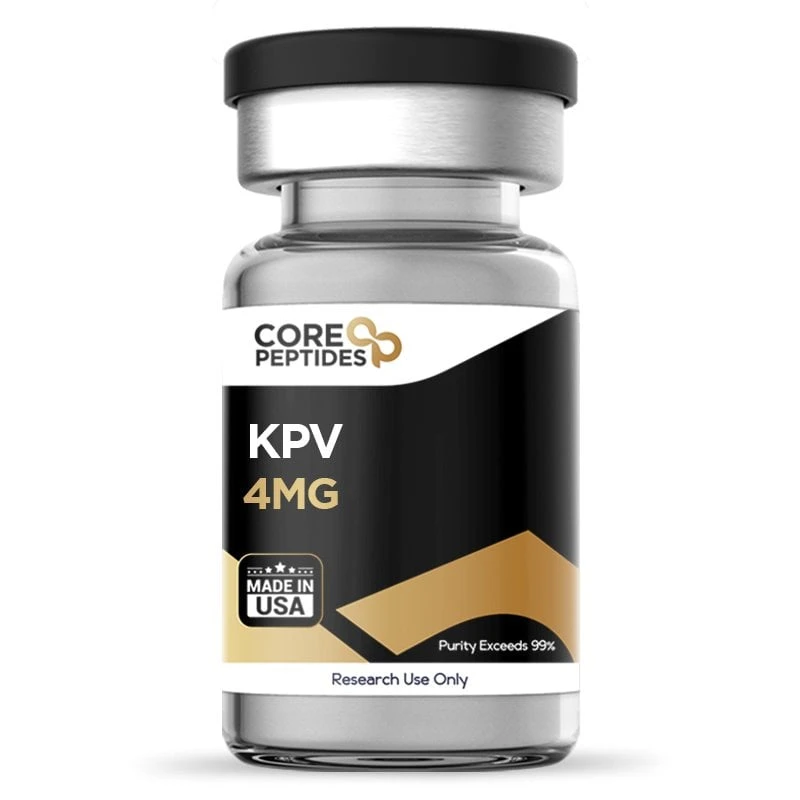
KPV (4mg) – Research Peptide for Inflammation and Cellular Signalling Studies
KPV (4mg) is a synthetic tripeptide consisting of lysine, proline and valine. It corresponds to the C-terminal tripeptide sequence of alpha-melanocyte-stimulating hormone (α-MSH) and is also known as MSH(11-13), ACTH(11-13) and α-MSH(11-13). KPV has attracted significant scientific interest for its potential role in inflammatory signalling, intestinal biology, epithelial responses and cellular communication.
The referenced product contains 4mg of KPV supplied as lyophilised powder, with the supplier reporting a purity of >99%. It is offered as a research and laboratory material rather than as a medicine, dietary supplement or product intended for human consumption.
Scientific research has investigated KPV in cell and animal models, particularly in relation to NF-κB and MAPK signalling, inflammatory cytokines, PepT1-mediated cellular uptake, intestinal inflammation, epithelial biology and tissue-repair processes.
What Is KPV?
KPV is a short tripeptide composed of three amino acids: Lysine (K), Proline (P) and Valine (V). It represents the C-terminal portion of α-MSH, a naturally occurring melanocortin peptide derived from proopiomelanocortin (POMC).
Research into α-MSH demonstrated that the C-terminal KPV sequence retains important biological activity despite being substantially smaller than the parent hormone.
The identification of KPV as a biologically active fragment has made it a useful experimental compound for studying how small peptide sequences can influence cellular signalling without requiring the complete parent hormone.
Research has particularly focused on the relationship between KPV and inflammatory pathways. Experimental studies have reported effects on inflammatory signalling in intestinal epithelial cells, immune cells and airway epithelial models.
KPV (4mg) Product Highlights
| Specification | Details |
|---|---|
| Product | KPV |
| Quantity | 4mg |
| Form | Lyophilised powder |
| Reported purity | >99% |
| Peptide type | Synthetic tripeptide |
| Amino acid sequence | Lys-Pro-Val |
| Related names | MSH(11-13), ACTH(11-13), α-MSH(11-13) |
| Molecular formula | C16H30N4O4 |
| Molecular weight | 342.43 g/mol |
| Primary research areas | Inflammatory signalling, intestinal biology and cellular research |
| Intended application | Laboratory, analytical and scientific research |
The product specifications above are based on the referenced Core Peptides listing. Researchers should consult the current batch documentation and certificate of analysis for the applicable material.
How Does KPV Work?
KPV has been investigated through several potentially overlapping mechanisms, and its exact biological activity can depend on the experimental model.
One important research pathway involves the proton-coupled oligopeptide transporter 1 (PepT1). Research using human intestinal epithelial and immune cell models found that KPV can be transported into cells through PepT1. Once inside cells, the study reported reductions in NF-κB and MAPK inflammatory signalling and decreased secretion of the inflammatory mediator IL-8.
Other research has investigated KPV in relation to melanocortin-associated pathways and cellular inflammatory responses. These findings indicate that KPV biology may involve mechanisms that differ from those of the full α-MSH molecule.
Because the precise mechanisms can vary according to cell type and experimental conditions, KPV remains an active subject of laboratory investigation.
KPV and NF-κB Signalling
Nuclear factor kappa B (NF-κB) is a major intracellular signalling system involved in regulating inflammatory gene expression.
When activated by inflammatory stimuli, NF-κB can promote the expression of numerous inflammatory mediators. Consequently, modulation of NF-κB signalling is an important area of research in cellular and molecular immunology.
Research involving human intestinal epithelial and immune cell models found that KPV inhibited activation of NF-κB following inflammatory stimulation. The same study reported reductions in inflammatory cytokine secretion following KPV exposure.
Separate research using human bronchial epithelial cells also reported dose-dependent inhibition of NF-κB-related responses following KPV exposure.
KPV and MAPK Signalling
The mitogen-activated protein kinase (MAPK) family contains several signalling pathways involved in cellular responses to stress, cytokines and other external stimuli.
In an experimental study of intestinal epithelial and immune cells, KPV exposure was associated with reduced activation of MAPK pathways alongside suppression of NF-κB signalling. The researchers linked these observations with reduced inflammatory mediator production.
This makes KPV relevant to laboratory studies investigating the molecular mechanisms through which small peptides influence inflammatory signalling networks.
KPV and PepT1 Research
PepT1 is a membrane transporter capable of transporting small peptides across cellular membranes. Its expression in intestinal epithelial and immune cells has made it an important subject in research into peptide-mediated intestinal signalling.
A study published in Gastroenterology investigated whether the anti-inflammatory activity of KPV was mediated through PepT1. Researchers used human intestinal epithelial cell lines, human T cells and mouse models of chemically induced colitis. The study reported that KPV was transported by PepT1 and that this was associated with reduced inflammatory signalling.
These findings have contributed to continued interest in KPV as a model compound for studying peptide transport and intestinal inflammatory pathways.
KPV and Intestinal Research
The intestinal tract contains a complex network of epithelial cells, immune cells, signalling molecules and microbial interactions. Inflammation within this environment can involve extensive activation of intracellular pathways and inflammatory mediators.
KPV has been investigated in experimental models of intestinal inflammation. Research using human intestinal epithelial cells reported reductions in inflammatory signalling following KPV exposure, while animal studies examined the peptide in chemically induced models of colitis.
These studies provide a scientific basis for investigating KPV in areas such as:
- Intestinal epithelial signalling.
- PepT1-mediated peptide transport.
- NF-κB activation.
- MAPK signalling.
- Inflammatory cytokine production.
- Intestinal immune-cell responses.
- Experimental models of colitis.
Importantly, these observations are primarily based on laboratory and animal research and should not be interpreted as evidence of an established clinical treatment.
KPV and Intestinal Epithelial Cells
Intestinal epithelial cells form an important physical and biological barrier between the intestinal contents and underlying tissues.
Experimental research has investigated how KPV interacts with intestinal epithelial cells and whether the peptide can influence inflammatory responses. In one study, KPV was taken up by human intestinal epithelial cells through PepT1 and was associated with reduced NF-κB and MAPK activation.
This research makes KPV particularly relevant to laboratory studies examining the relationship between small peptide transport and epithelial inflammatory signalling.
KPV and Cytokine Research
Cytokines are signalling proteins that coordinate immune and inflammatory responses. Excessive or prolonged production of certain pro-inflammatory cytokines can contribute to tissue inflammation.
Research involving KPV has examined its effect on cytokine production in intestinal and airway epithelial models. In the intestinal study, KPV reduced secretion of inflammatory mediators, while airway epithelial research reported changes in IL-8 and eotaxin secretion following exposure to KPV.
These findings make KPV a useful research tool for investigating peptide-mediated regulation of cytokine-associated signalling.
KPV and Airway Epithelial Research
KPV has also been studied in human bronchial epithelial cell models.
A study investigating inflammatory responses in immortalised human bronchial epithelial cells examined KPV following stimulation with TNF-α and respiratory syncytial virus. The researchers reported dose-dependent suppression of NF-κB signalling, matrix metalloproteinase-9 activity, IL-8 and eotaxin secretion.
The researchers also investigated the intracellular behaviour of KPV and reported an association with inhibition of p65RelA nuclear import. These observations provide another experimental model for studying how KPV can influence inflammatory signalling at the cellular level.
KPV and α-MSH
Alpha-melanocyte-stimulating hormone (α-MSH) is a 13-amino-acid melanocortin peptide derived from POMC. KPV represents its final three amino acids.
Research into α-MSH-derived peptides demonstrated that the C-terminal KPV sequence retains biological activity. This discovery helped establish KPV as an independent experimental peptide rather than simply an inactive degradation fragment.
| Feature | α-MSH | KPV |
|---|---|---|
| Peptide length | 13 amino acids | 3 amino acids |
| Relationship | Parent melanocortin peptide | C-terminal fragment of α-MSH |
| Sequence focus | Full α-MSH sequence | Lys-Pro-Val |
| Research interest | Melanocortin and endocrine signalling | Inflammatory and cellular signalling |
KPV and Melanocortin Research
KPV originates from the melanocortin peptide family, but research indicates that its mechanisms are not necessarily identical to those of full-length α-MSH.
Reviews have reported that KPV can retain anti-inflammatory activity even in experimental settings where classical melanocortin receptor mechanisms do not fully explain the observed effects. Research has consequently investigated alternative pathways, including peptide transport and intracellular signalling.
This distinction is important when interpreting KPV research: findings concerning α-MSH should not automatically be assumed to apply directly to isolated KPV.
KPV and Wound-Related Research
Wound healing involves several overlapping phases, including inflammation, proliferation and tissue remodelling. Researchers have investigated whether KPV can influence cellular processes involved in these stages.
The referenced Core Peptides literature summary describes experimental research into KPV and epithelial wound models, including studies involving corneal epithelial injury. These studies reported observations consistent with changes in epithelial recovery and cellular viability under specific experimental conditions.
Such findings remain preclinical and should be interpreted as experimental evidence rather than proof of a clinical wound-healing application.
KPV and Scar-Related Research
Researchers have also examined KPV in animal models involving skin injury and scar formation.
According to the supplier’s research summary, experimental mouse studies investigated changes in inflammatory cell activity, wound progression and subsequent scar formation following KPV exposure.
These findings contribute to interest in KPV as a research compound for studying interactions between inflammatory signalling and tissue remodelling.
KPV and Cellular Signalling
KPV is particularly useful for laboratory research because its small size provides a simple model for examining peptide-mediated cellular signalling.
Research has investigated several mechanisms, including:
- PepT1 transport: Cellular uptake of KPV in intestinal epithelial and immune cells.
- NF-κB signalling: Regulation of a major inflammatory transcription pathway.
- MAPK signalling: Modulation of intracellular kinase pathways associated with inflammatory responses.
- Cytokine secretion: Changes in production of inflammatory signalling molecules.
- p65RelA nuclear transport: Experimental investigation of NF-κB-related intracellular trafficking.
- Epithelial responses: Investigation in intestinal and airway epithelial models.
The involvement of multiple pathways makes KPV a useful model compound for molecular and cellular biology research.
KPV Research Applications
KPV (4mg) may be relevant to a variety of laboratory and scientific research areas, including:
- Inflammation research: Investigation of inflammatory signalling pathways.
- Cell biology: Study of cellular responses to small peptide molecules.
- Intestinal research: Investigation of epithelial and immune-cell signalling.
- Peptide transport: Study of PepT1-mediated uptake.
- Immunology: Investigation of inflammatory cytokine regulation.
- Molecular biology: Study of NF-κB and MAPK pathways.
- Airway research: Investigation of epithelial inflammatory signalling.
- Wound-model research: Experimental investigation of epithelial and tissue responses.
- Melanocortin research: Study of α-MSH-derived peptide activity.
- Peptide pharmacology: Investigation of small peptide structure and biological activity.
KPV Chemical Information
KPV is a particularly small peptide consisting of only three amino acids. The molecular information listed by the referenced supplier is shown below.
| Specification | Details |
|---|---|
| Peptide | KPV |
| Sequence | Lys-Pro-Val |
| Quantity | 4mg |
| Molecular formula | C16H30N4O4 |
| Molecular weight | 342.43 g/mol |
| Alternative names | MSH(11-13), ACTH(11-13), α-MSH(11-13) |
| Product form | Lyophilised powder |
| Reported purity | >99% |
Why Researchers Study KPV
KPV has become a notable research peptide because a very short three-amino-acid sequence derived from α-MSH retains measurable biological activity in experimental models.
Its compact structure, relationship to melanocortin biology and reported effects on inflammatory pathways make it particularly interesting for researchers studying:
- Peptide-cell interactions.
- Inflammatory pathway regulation.
- Intestinal epithelial biology.
- Immune-cell signalling.
- NF-κB and MAPK activity.
- PepT1-mediated peptide transport.
- α-MSH-derived peptide biology.
- Epithelial tissue responses.
Research published in peer-reviewed literature has provided evidence for KPV activity in cell and animal models, although the overall evidence base remains predominantly preclinical.
KPV Compared with α-MSH
KPV and α-MSH are closely related but should not be treated as equivalent research materials.
| Characteristic | KPV | α-MSH |
|---|---|---|
| Structure | Three-amino-acid tripeptide | 13-amino-acid peptide hormone |
| Sequence | Lys-Pro-Val | Full α-MSH sequence |
| Relationship | C-terminal fragment | Parent peptide |
| Research focus | Inflammatory and cellular signalling | Melanocortin, pigmentation and endocrine signalling |
Although KPV forms part of α-MSH, research suggests that KPV can exhibit biological activity through mechanisms that differ from those of the full hormone.
Frequently Asked Questions About KPV
What is KPV?
KPV is a three-amino-acid peptide consisting of lysine, proline and valine. It is the C-terminal tripeptide sequence of α-MSH and is studied primarily in inflammatory and cellular biology research.
What does KPV stand for?
The letters KPV correspond to the amino acid sequence Lysine-Proline-Valine. K represents lysine, P represents proline and V represents valine.
What is KPV derived from?
KPV is the C-terminal portion of alpha-melanocyte-stimulating hormone (α-MSH), a melanocortin peptide derived from POMC.
What is KPV researched for?
KPV is researched in areas including inflammatory signalling, intestinal epithelial biology, PepT1-mediated transport, NF-κB and MAPK signalling, cytokine regulation and tissue-response models.
Does KPV interact with PepT1?
Research using human intestinal epithelial and immune cells found that KPV can be transported into cells through PepT1. The study linked this uptake with reduced NF-κB and MAPK inflammatory signalling.
Has KPV been studied in intestinal models?
Yes. Researchers have investigated KPV in human intestinal cell models and mouse models of chemically induced intestinal inflammation. These studies reported changes in inflammatory signalling and cytokine expression under the experimental conditions used.
Has KPV been studied in airway cells?
Yes. Research using human bronchial epithelial cells investigated KPV in inflammatory models and reported suppression of NF-κB signalling and certain inflammatory mediators.
What quantity does the referenced product contain?
The referenced product contains 4mg of KPV in lyophilised powder form, with the supplier reporting purity above 99%.
What is the molecular weight of KPV?
The molecular weight listed by the referenced supplier is 342.43 g/mol, with the molecular formula C16H30N4O4.
Is KPV an approved medicine?
Research-grade KPV should not be presented as an approved medicine. The referenced supplier identifies the product for research and laboratory purposes and prohibits human or animal consumption.
Does research on KPV prove that it treats inflammatory diseases?
No. Although experimental studies have reported anti-inflammatory activity in cell and animal models, these findings do not establish that research-grade KPV is a proven treatment for inflammatory diseases in humans.
Research Summary
KPV (4mg) is a synthetic tripeptide composed of lysine, proline and valine and corresponds to the C-terminal portion of α-MSH. It has attracted scientific interest because of its activity in experimental models involving inflammatory signalling and epithelial biology.
Research has investigated KPV in human intestinal epithelial and immune cells, where studies reported PepT1-mediated uptake alongside reductions in NF-κB and MAPK signalling and inflammatory cytokine secretion. Additional research has examined KPV in airway epithelial models and reported effects on inflammatory signalling pathways.
As a result, KPV is particularly relevant to laboratory studies involving peptide transport, inflammatory signalling, intestinal biology, epithelial responses, cytokine regulation and molecular cell biology.
Research-Use Disclaimer
KPV (4mg) is intended for laboratory, analytical and scientific research purposes only. It is not a food product, dietary supplement or approved medicinal product.
The information provided on this page is intended for educational and research purposes and does not constitute medical advice. Experimental findings from cell cultures and animal models should not be interpreted as evidence that KPV can diagnose, treat, cure or prevent any disease or medical condition.
The referenced supplier specifically states that its KPV product is intended for research and laboratory purposes and is not for human consumption.
This page does not provide instructions for human administration, dosing, injection, reconstitution for human use or self-experimentation. Researchers should follow appropriate laboratory procedures, supplier documentation, institutional requirements and all applicable laws and regulations when handling research peptides.
Be the first to review “KPV (4mg)”
Related products
Peptides for Sale
Peptides for Sale
Peptides for Sale
Peptides for Sale
Peptides for Sale
Peptides for Sale
Peptides for Sale
Peptides for Sale
Reviews
There are no reviews yet.