
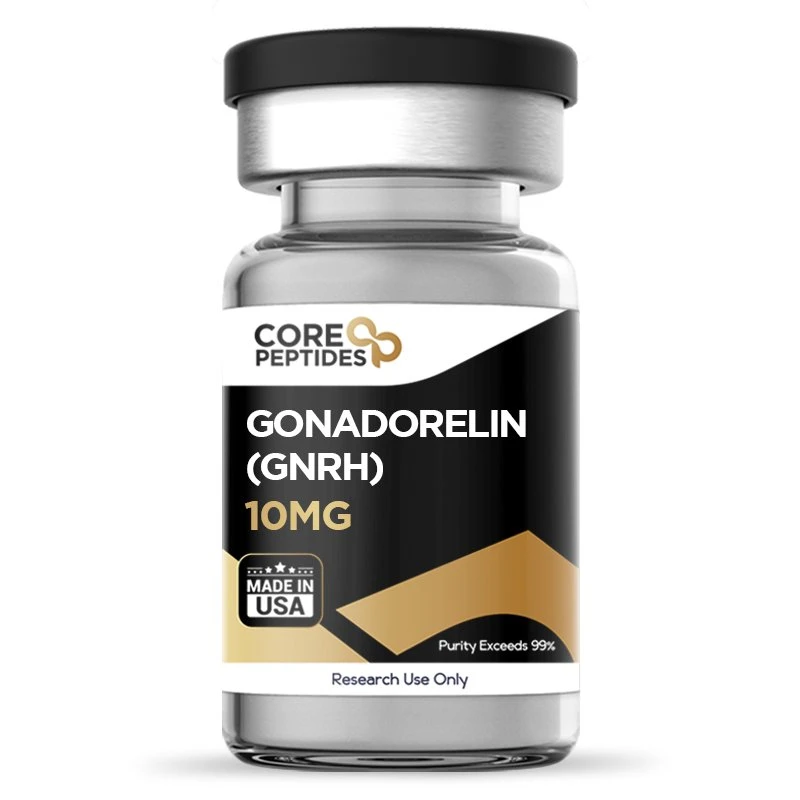
Gonadorelin (GnRH) (10mg) – Research Peptide for Reproductive Endocrinology
Gonadorelin (GnRH) (10mg) is a synthetic decapeptide that corresponds to the naturally occurring gonadotropin-releasing hormone (GnRH). GnRH is a central regulator of the hypothalamic-pituitary-gonadal (HPG) axis and plays a key role in controlling the synthesis and secretion of the pituitary gonadotropins luteinising hormone (LH) and follicle-stimulating hormone (FSH).
The referenced product contains 10mg of Gonadorelin in lyophilised powder form and is presented as a research material. According to the supplier information, the product is listed with a purity of >99%.
Gonadorelin is particularly relevant to laboratory investigations involving GnRH receptor signalling, pituitary endocrinology, LH and FSH secretion, reproductive hormone regulation and HPG-axis physiology. Its well-established role in reproductive endocrinology makes it a useful research compound for studying how hypothalamic signalling influences downstream endocrine processes.
What Is Gonadorelin?
Gonadorelin is the synthetic form of gonadotropin-releasing hormone, commonly abbreviated as GnRH. Endogenous GnRH is produced in the hypothalamus and released in a pulsatile manner. It acts on GnRH receptors located on pituitary gonadotroph cells, stimulating the production and secretion of LH and FSH.
Gonadorelin is a decapeptide, meaning that it consists of ten amino acids. The synthetic peptide is structurally equivalent to naturally occurring GnRH and has consequently been used extensively in research investigating the biological mechanisms associated with GnRH receptor activation.
Because GnRH sits near the beginning of the reproductive endocrine signalling cascade, research involving Gonadorelin can provide insight into the communication between the hypothalamus, pituitary gland and gonads.
Gonadorelin (GnRH) (10mg) – Product Highlights
- Product name: Gonadorelin (GnRH)
- Quantity: 10mg
- Peptide type: Synthetic decapeptide
- Alternative name: Gonadotropin-releasing hormone
- Form: Lyophilised powder
- Reported purity: >99%
- Primary research area: Reproductive endocrinology
- Primary receptor: Gonadotropin-releasing hormone receptor (GnRHR)
- Key downstream hormones: Luteinising hormone (LH) and follicle-stimulating hormone (FSH)
- Research applications: HPG-axis, pituitary, endocrine and receptor-signalling research
- Intended use: Laboratory and scientific research
Exact product specifications should always be confirmed against the current batch documentation supplied with the material.
How Does Gonadorelin Work?
Gonadorelin is studied primarily because of its interaction with the GnRH receptor on pituitary gonadotroph cells.
Under physiological conditions, GnRH is released from the hypothalamus in pulses. These pulses interact with GnRH receptors in the anterior pituitary and stimulate the synthesis and secretion of LH and FSH.
At the cellular level, the GnRH receptor belongs to the G protein-coupled receptor family. Activation of the receptor initiates intracellular signalling pathways involving phospholipase C, inositol trisphosphate, diacylglycerol, calcium mobilisation and protein kinase C activity. These signalling events contribute to gonadotropin synthesis and secretion.
This receptor-mediated mechanism is one of the main reasons Gonadorelin is valuable in research involving pituitary hormone signalling.
Gonadorelin and LH Research
Luteinising hormone (LH) is one of the principal gonadotropins regulated by GnRH.
Research into GnRH signalling has demonstrated that activation of GnRH receptors on pituitary gonadotrophs stimulates LH synthesis and secretion. The precise response depends on the pattern and duration of GnRH receptor stimulation, making Gonadorelin relevant to studies examining the relationship between GnRH signalling and LH release.
Researchers can therefore use Gonadorelin as a model ligand when investigating the molecular and physiological mechanisms underlying LH regulation.
Gonadorelin and FSH Research
Follicle-stimulating hormone (FSH) is the second major gonadotropin regulated by GnRH.
Alongside LH, FSH is produced by pituitary gonadotrophs following GnRH receptor activation. Research into the GnRH system therefore provides an important framework for studying the coordinated regulation of LH and FSH.
The balance and secretion patterns of these hormones are influenced by multiple factors, including GnRH signalling and feedback from gonadal hormones. This makes Gonadorelin relevant to experimental investigations of reproductive endocrinology.
Gonadorelin and the Hypothalamic-Pituitary-Gonadal Axis
The hypothalamic-pituitary-gonadal (HPG) axis is an interconnected endocrine system involving the hypothalamus, pituitary gland and gonads.
GnRH represents an important upstream signal in this system. Hypothalamic GnRH stimulates pituitary LH and FSH secretion, while these gonadotropins subsequently influence gonadal function. Gonadal hormones then participate in feedback mechanisms that regulate activity within the reproductive endocrine axis.
Because Gonadorelin reproduces the structure of endogenous GnRH, it provides researchers with a defined peptide for studying this signalling pathway under controlled experimental conditions.
Pulsatile GnRH Signalling
An important characteristic of physiological GnRH signalling is its pulsatile pattern.
GnRH is naturally secreted in pulses rather than continuously. Research has shown that the pattern of GnRH exposure can influence gonadotropin production and secretion. This makes pulse frequency, exposure duration and receptor responsiveness important considerations in studies of the HPG axis.
Experimental research into Gonadorelin can therefore help investigate how different patterns of GnRH receptor stimulation influence downstream endocrine responses.
Gonadorelin and GnRH Receptor Desensitisation
GnRH receptor signalling is strongly dependent on the duration and pattern of receptor stimulation.
While physiological GnRH signalling is pulsatile, prolonged activation of GnRH receptors can result in receptor desensitisation. Research has demonstrated that sustained GnRH exposure can ultimately suppress gonadotropin secretion following an initial stimulatory response.
This phenomenon is particularly important in experimental endocrinology because it illustrates how the same receptor system can produce different endocrine outcomes depending on the temporal characteristics of stimulation.
Gonadorelin and Pituitary Research
The pituitary gland is a major focus of Gonadorelin research because GnRH receptors are expressed on pituitary gonadotroph cells.
Researchers studying Gonadorelin can investigate:
- GnRH receptor activation.
- LH synthesis and secretion.
- FSH synthesis and secretion.
- Intracellular calcium signalling.
- Protein kinase C activation.
- Phospholipase C signalling.
- Gonadotroph responsiveness.
- Receptor desensitisation following prolonged stimulation.
These research areas contribute to a broader understanding of how hypothalamic signals are translated into pituitary endocrine responses.
Gonadorelin and Cellular Signalling
GnRH receptor activation involves several intracellular signalling pathways. The receptor is associated with Gq/G11 proteins, which activate phospholipase C and generate second messengers including inositol trisphosphate and diacylglycerol. These pathways contribute to calcium mobilisation and protein kinase C activation.
These molecular events provide opportunities for researchers to study peptide-receptor interactions from both biochemical and cellular perspectives.
Gonadorelin can therefore be used as an experimental ligand in research focused on receptor pharmacology, signal transduction and endocrine cell biology.
Gonadorelin Research Applications
Gonadorelin may be relevant to a range of laboratory and scientific research areas, including:
- Reproductive endocrinology: Investigation of the hormonal mechanisms controlling reproductive function.
- HPG-axis research: Study of signalling between the hypothalamus, pituitary gland and gonads.
- Pituitary research: Investigation of gonadotroph responses to GnRH receptor activation.
- LH research: Study of luteinising hormone synthesis and secretion.
- FSH research: Investigation of follicle-stimulating hormone regulation.
- Receptor pharmacology: Examination of GnRH receptor activation and desensitisation.
- Cell signalling: Investigation of calcium, phospholipase C and protein kinase C pathways.
- Endocrine physiology: Study of hormonal feedback and regulatory mechanisms.
- Analytical research: Characterisation and identification of synthetic GnRH peptides.
Gonadorelin in Reproductive Research
GnRH is a fundamental regulator of reproductive endocrinology. It controls the pituitary secretion of LH and FSH, which subsequently participate in the regulation of gonadal activity.
For this reason, Gonadorelin can be used in laboratory investigations involving reproductive hormone pathways, endocrine feedback and gonadotropin secretion.
Research involving the GnRH system can be particularly valuable for understanding how changes in hypothalamic signalling affect downstream endocrine processes.
Gonadorelin and Endocrine Feedback
The reproductive endocrine system operates through interconnected feedback mechanisms. LH and FSH influence gonadal activity, while gonadal hormones can feed back to the hypothalamus and pituitary to modify reproductive hormone signalling.
Research reviews describe GnRH as a central component of this regulatory network, with gonadal steroids and other gonadal factors influencing GnRH actions through positive and negative feedback mechanisms.
Gonadorelin therefore provides researchers with a useful experimental tool for examining how upstream GnRH signalling interacts with downstream endocrine feedback.
Gonadorelin vs GnRH Analogues
Gonadorelin is the synthetic form of naturally occurring GnRH. It should be distinguished from modified GnRH agonists and antagonists, which contain structural changes designed to alter their pharmacological characteristics.
| Research Material | General Classification | Research Focus |
|---|---|---|
| Gonadorelin | Synthetic GnRH / GnRH receptor agonist | Physiological GnRH receptor signalling and gonadotropin release |
| GnRH agonists | Modified GnRH analogues | Receptor activation and altered duration of signalling |
| GnRH antagonists | Modified GnRH analogues | Competitive inhibition of GnRH receptor signalling |
These compounds should not be considered interchangeable because structural modifications can substantially alter receptor activity, duration and biological effects.
Gonadorelin Chemical Information
The supplier identifies Gonadorelin as a synthetic ten-amino-acid peptide corresponding to endogenous GnRH. The listed molecular formula is C55H75N17O13, with a reported molecular weight of approximately 1182.31 g/mol.
| Specification | Details |
|---|---|
| Product | Gonadorelin (GnRH) |
| Quantity | 10mg |
| Peptide structure | Decapeptide |
| Form | Lyophilised powder |
| Reported purity | >99% |
| Molecular formula | C55H75N17O13 |
| Reported molecular weight | 1182.31 g/mol |
| Primary receptor | GnRH receptor |
| Primary research area | Reproductive endocrinology |
Why Researchers Study Gonadorelin
Gonadorelin has a well-established place in reproductive endocrinology research because GnRH is one of the principal signalling hormones controlling pituitary gonadotropin secretion.
Key reasons for studying Gonadorelin include:
- Its structural similarity to endogenous GnRH.
- Its defined interaction with GnRH receptors.
- Its relevance to LH and FSH secretion.
- Its importance in HPG-axis research.
- Its usefulness for investigating pituitary gonadotroph signalling.
- Its relevance to receptor desensitisation studies.
- Its value in investigating intracellular endocrine signalling pathways.
These characteristics make Gonadorelin a relevant research material for laboratories investigating reproductive hormone regulation.
Gonadorelin (GnRH) (10mg) – Research Overview
| Research Parameter | Overview |
|---|---|
| Hormone system | Hypothalamic-pituitary-gonadal axis |
| Primary receptor | GnRH receptor |
| Major downstream hormones | LH and FSH |
| Primary tissue of interest | Pituitary gonadotroph cells |
| Signalling pathways | Gq/G11, phospholipase C, IP3, DAG, calcium and protein kinase C |
| Research disciplines | Endocrinology, reproductive biology, receptor pharmacology and cell signalling |
Frequently Asked Questions About Gonadorelin
What is Gonadorelin?
Gonadorelin is a synthetic decapeptide corresponding to gonadotropin-releasing hormone (GnRH). It is studied for its interaction with GnRH receptors and its role in regulating pituitary LH and FSH secretion.
What does GnRH stand for?
GnRH stands for gonadotropin-releasing hormone. It is a hypothalamic hormone that regulates the pituitary secretion of LH and FSH.
How does Gonadorelin interact with the pituitary?
Gonadorelin binds to GnRH receptors on pituitary gonadotroph cells. Receptor activation initiates intracellular signalling processes that regulate the synthesis and release of LH and FSH.
What are LH and FSH?
LH and FSH are pituitary gonadotropins. They are important downstream hormones within the reproductive endocrine system and participate in the regulation of gonadal function.
Is Gonadorelin the same as GnRH?
Gonadorelin is the synthetic form of naturally occurring GnRH and is structurally equivalent to the endogenous hormone.
Why is pulsatile GnRH signalling important?
Physiological GnRH is released in pulses. The frequency and duration of receptor stimulation influence downstream gonadotropin secretion. Prolonged receptor activation can instead lead to desensitisation and suppression of gonadotropin secretion.
What quantity does this product contain?
The referenced product contains 10mg of Gonadorelin and is supplied as lyophilised powder. The supplier lists a reported purity of >99%.
Is Gonadorelin a growth hormone peptide?
No. Gonadorelin belongs to the GnRH family and primarily concerns reproductive endocrine signalling. It should not be confused with growth hormone-releasing peptides or growth hormone secretagogues.
Can Gonadorelin research results be interpreted as medical advice?
No. Experimental and scientific findings should be interpreted within the context of the relevant study. Research information does not establish that a peptide is suitable for self-administration or treatment of a medical condition.
Research Summary
Gonadorelin (GnRH) (10mg) is a synthetic decapeptide corresponding to naturally occurring gonadotropin-releasing hormone. It is an important research compound for studying the mechanisms through which hypothalamic GnRH signalling regulates pituitary LH and FSH secretion.
Research has established that GnRH receptors are G protein-coupled receptors whose activation initiates intracellular signalling involving phospholipase C, second messengers, calcium mobilisation and protein kinase C. These mechanisms contribute to gonadotropin synthesis and release.
Another important research characteristic is the difference between pulsatile and prolonged GnRH exposure. While physiological pulsatile signalling promotes gonadotropin release, sustained receptor activation can produce receptor desensitisation and subsequent suppression of LH and FSH secretion.
Overall, Gonadorelin is particularly relevant to scientific investigations involving GnRH receptor biology, pituitary endocrinology, LH and FSH regulation, reproductive hormone signalling and the hypothalamic-pituitary-gonadal axis.
Research-Use Disclaimer
Gonadorelin (GnRH) (10mg) should be treated as a laboratory and scientific research material. This product description is provided for educational and research-information purposes and does not constitute medical advice.
The information presented here should not be interpreted as a recommendation to diagnose, treat, cure or prevent any disease or medical condition. Research findings can vary according to the experimental model, protocol, concentration, exposure conditions and other variables.
This page does not provide instructions for human administration, dosing, injection, reconstitution for human use or self-experimentation. Researchers should consult appropriate scientific documentation, follow institutional laboratory procedures and comply with all applicable laws and regulations when handling research peptides.
Be the first to review “Gonadorelin (GnRH) (10mg)”
Related products

Peptides for Sale
Peptides for Sale
Peptides for Sale
Peptides for Sale
Peptides for Sale
Peptides for Sale
Peptides for Sale
Peptides for Sale
Reviews
There are no reviews yet.