
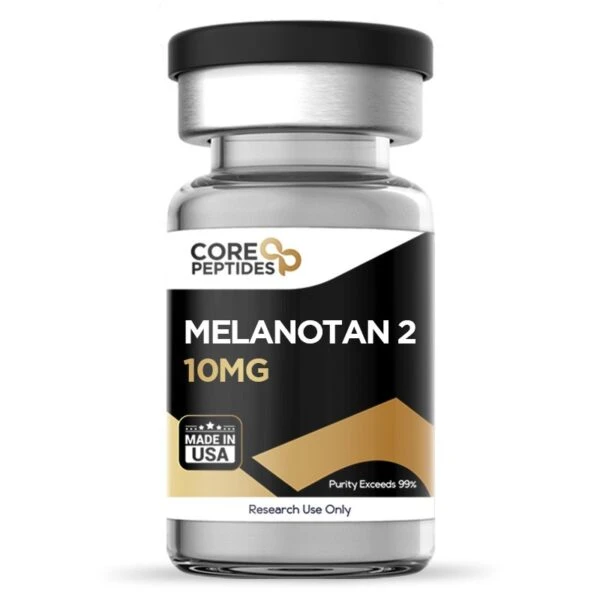

Melanotan 2 (10mg) – Synthetic Melanocortin Research Peptide
Melanotan 2 (10mg), commonly abbreviated as MT-II, is a synthetic cyclic analogue of alpha-melanocyte-stimulating hormone (α-MSH) that has been investigated extensively within melanocortin receptor, pigmentation and peptide pharmacology research.
Unlike the linear Melanotan 1 analogue, Melanotan 2 is a cyclic heptapeptide designed to interact with melanocortin receptors and has demonstrated potent melanotropic activity in experimental research.
Melanotan II has attracted scientific interest because the melanocortin receptor system is involved in several physiological processes, including pigmentation, energy homeostasis and sexual function. Research has particularly examined MT-II as a tool compound for studying melanocortin receptor activation, ligand-receptor interactions and pigmentation-related signalling.
Melanotan 2 (10mg) should be regarded as a research material rather than an authorised medicine or cosmetic tanning product. Melanotan II is not an approved treatment for tanning or other medical conditions, and published literature has documented potentially significant adverse effects associated with human exposure.
What Is Melanotan 2?
Melanotan 2 is a synthetic analogue of α-MSH belonging to the melanocortin peptide family. It was developed as a cyclic melanotropic peptide and contains a lactam bridge that gives the molecule its characteristic cyclic structure.
Experimental research has described Melanotan II as a potent melanocortin receptor agonist. Its activity has made it a useful research tool for investigating the biological functions of melanocortin receptors and the signalling pathways associated with them.
The melanocortin receptor family contains five recognised receptor subtypes: MC1R, MC2R, MC3R, MC4R and MC5R. These receptors are involved in different biological pathways, with MC1R particularly associated with melanocyte function and pigmentation.
Melanotan 2 (10mg) Product Overview
| Specification | Details |
|---|---|
| Product Name | Melanotan 2 |
| Alternative Name | Melanotan II / MT-II |
| Quantity | 10mg |
| Peptide Type | Synthetic cyclic melanocortin peptide |
| Research Classification | Melanocortin receptor research compound |
| Primary Research Areas | MC receptor pharmacology, pigmentation and peptide biology |
| Intended Use | Research and laboratory applications only |
Melanotan 2 Chemical Structure
Melanotan II is a cyclic heptapeptide analogue derived from the α-MSH sequence. Published research describes its structure as Ac-Nle4-Asp5-His6-D-Phe7-Arg8-Trp9-Lys10-α-MSH4-10-NH2, with a lactam bridge contributing to its cyclic configuration.
This structural arrangement is important to peptide research because cyclisation can influence molecular conformation, receptor interactions and biological stability. Melanotan II has consequently been used as a reference compound in studies examining melanocortin receptor structure-activity relationships.
Melanotan 2 and the Melanocortin Receptor System
The melanocortin system is a complex signalling network consisting of endogenous peptide hormones, melanocortin receptors and receptor-associated regulatory proteins.
Five melanocortin receptor subtypes have been identified:
- MC1R: Strongly associated with melanocyte signalling and pigmentation.
- MC2R: Primarily involved in adrenocorticotropic hormone signalling.
- MC3R: Studied in relation to energy regulation and other physiological functions.
- MC4R: Extensively investigated in energy homeostasis and appetite-related signalling.
- MC5R: Investigated in several peripheral physiological pathways.
Because Melanotan II can interact with multiple melanocortin receptor subtypes, it is generally described as a non-selective melanocortin receptor agonist rather than a highly selective MC1R ligand. This broad receptor activity is an important consideration when interpreting experimental results.
Melanotan 2 and MC1R Research
MC1R is a G-protein-coupled receptor expressed prominently by melanocytes. Activation of MC1R is closely associated with melanogenesis and regulation of the type and amount of melanin produced by melanocytes.
Research into melanocortin signalling has established that MC1R is an important regulator of pigmentation biology. Synthetic melanocortin analogues such as Melanotan II can therefore be used experimentally to investigate receptor activation, downstream signalling and melanocyte responses.
Studies of melanocortin receptors have also demonstrated that receptor subtype distribution and ligand selectivity can influence the biological effects observed in different experimental systems.
Melanotan 2 and Melanin Research
Melanin is a naturally occurring pigment produced by melanocytes. Two principal forms, eumelanin and pheomelanin, contribute to differences in pigmentation.
MC1R signalling is particularly important in the regulation of eumelanin production. Melanocortin agonists are therefore valuable experimental compounds for studying the molecular mechanisms connecting receptor activation with melanogenesis.
Melanotan II has demonstrated melanotropic activity in human and experimental research, making it a historically important compound for investigating the relationship between melanocortin receptor activation and pigmentation.
Melanotan 2 in Pigmentation Research
One of the best-known research characteristics of Melanotan II is its ability to stimulate pigmentation-related pathways.
In an early phase-I clinical study, investigators described Melanotan II as a potent cyclic α-MSH analogue. The study observed increased pigmentation in some participants following experimental exposure, while also reporting effects such as nausea, fatigue, somnolence, yawning and spontaneous erections.
These findings helped establish the importance of Melanotan II as a research compound but also illustrate why experimental observations should not be interpreted as evidence that unapproved Melanotan II products are safe or suitable for cosmetic tanning.
Melanotan 2 and Sexual-Function Research
The melanocortin system has been investigated in relation to sexual physiology, and Melanotan II has been studied experimentally for its effects on sexual function.
Human studies conducted during the early development of melanocortin agonists reported erections and changes in sexual desire following experimental administration of Melanotan II. One controlled study involving men with erectile dysfunction reported penile erections following MT-II exposure, while nausea and yawning were among the reported adverse effects.
These historical studies are relevant to melanocortin pharmacology but do not establish Melanotan II as an approved treatment for erectile dysfunction or sexual health.
Melanotan 2 Research Applications
Melanotan II may be of interest to qualified researchers investigating:
- Melanocortin receptor pharmacology: Studying agonist-receptor interactions.
- MC1R biology: Investigating receptor signalling associated with melanocytes.
- Melanogenesis: Examining cellular pathways involved in melanin production.
- Peptide structure-activity relationships: Exploring how peptide cyclisation affects receptor activity.
- GPCR research: Studying melanocortin receptors as G-protein-coupled receptors.
- Ligand binding: Comparing synthetic melanocortin ligands and receptor affinity.
- Skin biology: Investigating melanocyte and pigmentation pathways.
- Sexual-function research: Studying melanocortin signalling in experimental models.
- Drug discovery: Using MT-II as a reference compound for developing melanocortin receptor ligands.
Melanotan 2 in Receptor Research
Melanotan II has become an important reference compound in melanocortin receptor research because it is a potent agonist with activity across multiple receptor subtypes.
Modern research continues to use synthetic melanocortin ligands, including Melanotan II, to investigate receptor structure, ligand recognition and receptor activation. A 2024 review identified MT-II among important melanocortin tool compounds used to study melanocortin receptor physiology and ligand-receptor mechanisms.
This makes Melanotan II relevant to contemporary pharmacological research involving GPCR structure and function.
Melanotan 2 and GPCR Signalling
Melanocortin receptors belong to the Class A G-protein-coupled receptor (GPCR) family.
When an agonist binds to an appropriate receptor, conformational changes can initiate intracellular signalling cascades. Depending on receptor subtype and cellular context, melanocortin signalling can influence pathways associated with pigmentation, energy homeostasis, endocrine activity and other physiological functions.
Melanotan II provides researchers with a useful experimental ligand for investigating these receptor-mediated processes.
Melanotan 2 vs Melanotan 1
| Characteristic | Melanotan 1 | Melanotan 2 |
|---|---|---|
| Structure | Linear α-MSH analogue | Cyclic α-MSH analogue |
| Common Abbreviation | MT-I | MT-II |
| Research Focus | Melanocortin signalling and pigmentation | Melanocortin receptor pharmacology, pigmentation and broader receptor activity |
| Receptor Profile | Strong relevance to MC1R research | Broad melanocortin receptor agonist activity |
| Peptide Configuration | Linear | Cyclic |
Although the two compounds are related, they are distinct molecules with different structures and pharmacological characteristics. They should not be treated as interchangeable research materials.
Melanotan 2 vs α-MSH
α-MSH is an endogenous melanocortin peptide produced from proopiomelanocortin (POMC). Melanotan II is a synthetic analogue designed to reproduce and modify important biological features of melanocortin peptides.
Whereas endogenous α-MSH is a naturally occurring hormone, MT-II is a synthetic cyclic peptide that has been developed primarily as an experimental melanocortin agonist.
The distinction is particularly important when interpreting laboratory experiments because synthetic analogues may have receptor activity and pharmacological characteristics that differ from endogenous ligands.
Melanotan 2 and Peptide Pharmacology
Melanotan II is particularly useful in peptide pharmacology because it illustrates how relatively small changes in peptide structure can influence receptor activity.
The cyclic configuration of MT-II was designed to constrain the peptide into a conformation relevant to melanocortin receptor interaction. This has made the compound valuable for structure-activity relationship studies and the development of newer melanocortin receptor ligands.
Research into melanocortin receptor ligands continues to examine ways of achieving improved receptor selectivity, activity and pharmacological characteristics.
Melanotan 2 and Research Safety
Melanotan II is not an authorised medicine for cosmetic tanning or general wellness use. Published human research has identified adverse effects associated with experimental exposure, including nausea, yawning, fatigue, somnolence and changes in sexual function.
There are also published case reports describing serious adverse events following unsupervised use of Melanotan II products obtained through informal or online channels. One report described systemic toxicity and rhabdomyolysis following self-administration of an internet-purchased product.
Researchers should therefore distinguish carefully between controlled laboratory research and unregulated human self-administration.
Melanotan 2 and Pigmented Lesions
Changes in pigmentation and pigmented lesions have been reported in connection with Melanotan II exposure, which is an important consideration in the scientific and clinical literature surrounding the compound.
A published case report described melanoma in a person who had used Melanotan II injections for tanning and highlighted concerns regarding the unlicensed and incompletely characterised nature of MT-II. The report does not establish that Melanotan II caused the melanoma, but it illustrates why changes in pigmented lesions should not be ignored.
Researchers and healthcare professionals should treat unexplained or changing pigmented lesions as a matter requiring appropriate professional assessment rather than attributing them to normal pigmentation changes.
Melanotan 2 and Unregulated Products
Products sold online under the Melanotan II name may not be manufactured according to pharmaceutical standards. Research into online user experiences has highlighted concerns including misinformation, product preparation, potentially contaminated materials and unsafe practices associated with unregulated MT-II products.
For laboratory work, researchers should obtain materials from appropriate scientific suppliers, review available analytical documentation and follow institutional procedures for handling research compounds.
Melanotan 2 Research Considerations
When Melanotan II is used in laboratory research, several factors should be considered:
- Identity: Confirm that the material corresponds to the intended peptide.
- Purity: Review appropriate analytical data and batch documentation.
- Structural integrity: Consider peptide degradation and storage conditions.
- Receptor selectivity: Account for the broad melanocortin receptor activity of MT-II.
- Experimental model: Clearly distinguish in-vitro, animal and human evidence.
- Controls: Use suitable positive, negative and vehicle controls.
- Analytical endpoints: Select validated methods appropriate to the research question.
- Regulatory requirements: Follow applicable institutional and local requirements for research materials.
Why Study Melanotan 2?
Melanotan II remains scientifically relevant because it provides a well-characterised synthetic ligand for investigating the melanocortin receptor system.
Its research significance includes:
- Potent melanocortin receptor activity.
- A distinctive cyclic peptide structure.
- Extensive historical research into pigmentation.
- Human research examining melanocortin-mediated physiological responses.
- Use as a reference compound in melanocortin receptor studies.
- Relevance to GPCR structure and ligand-receptor research.
- Applications in peptide structure-activity relationship studies.
Frequently Asked Questions About Melanotan 2 (10mg)
What is Melanotan 2?
Melanotan 2, or MT-II, is a synthetic cyclic analogue of α-MSH and a potent melanocortin receptor agonist that has been investigated extensively in peptide and receptor pharmacology research.
What does MT-II stand for?
MT-II is the commonly used abbreviation for Melanotan II.
What is Melanotan 2 researched for?
Research applications include melanocortin receptor pharmacology, pigmentation, melanogenesis, peptide structure-activity relationships, GPCR signalling and experimental studies of melanocortin-mediated physiological processes.
Does Melanotan 2 interact with melanocortin receptors?
Yes. Melanotan II is described in the scientific literature as a potent, relatively non-selective melanocortin receptor agonist. Its broad receptor activity is one reason it is useful as a research tool.
Is Melanotan 2 the same as Melanotan 1?
No. They are related synthetic melanocortin analogues but have different structures. Melanotan I is a linear analogue, whereas Melanotan II is a cyclic peptide.
Is Melanotan 2 an approved medicine?
Melanotan II is not an authorised medicine for cosmetic tanning. It has been investigated experimentally, including in early human studies, but research findings should not be interpreted as approval for general therapeutic or cosmetic use.
Has Melanotan 2 been studied in humans?
Yes. Early phase-I and controlled clinical studies investigated MT-II in humans, including research into pigmentation and melanocortin-mediated sexual responses. These studies also reported adverse effects.
What adverse effects have been reported in human research?
Published studies have reported effects including nausea, yawning, fatigue, somnolence and spontaneous erections. Serious adverse events have also been reported in case reports involving unsupervised use of internet-purchased products.
Is Melanotan 2 suitable for cosmetic tanning?
Melanotan II should not be presented as an authorised cosmetic tanning product or as a substitute for established sun-protection measures. Its use as a tanning agent involves an unapproved and incompletely characterised compound.
Can Melanotan 2 be used to treat erectile dysfunction?
No. Although historical clinical research investigated MT-II in relation to erectile responses, this does not make research-grade Melanotan II an approved treatment for erectile dysfunction.
What is the difference between Melanotan 2 and afamelanotide?
Melanotan II and afamelanotide are distinct melanocortin analogues. Afamelanotide is a pharmaceutical melanocortin analogue developed from melanocortin research and is associated with an authorised medicinal product for a specific medical indication. Melanotan II is a separate cyclic research compound.
Melanotan 2 (10mg) Research Summary
Melanotan 2 (10mg) is a synthetic cyclic melanocortin peptide with a substantial history of laboratory and human research. Its primary scientific relevance comes from its potent activity within the melanocortin receptor system and its use as an experimental ligand for investigating receptor activation, pigmentation and melanocortin pharmacology.
Research has demonstrated that MT-II can influence melanocortin-mediated pathways and produce pigmentation-related responses. Human studies have also documented physiological effects and adverse reactions, demonstrating why Melanotan II should not be treated as an ordinary cosmetic or wellness product.
For qualified laboratories, Melanotan II can serve as a useful research compound for studying melanocortin receptors, GPCR signalling, melanogenesis, pigmentation biology, peptide structure-activity relationships and ligand-receptor interactions.
Research-Use Disclaimer
Melanotan 2 (10mg) is intended for research, laboratory and analytical purposes only. It is not intended for human or animal consumption, self-administration, cosmetic tanning, diagnosis, treatment, cure or prevention of any disease.
Melanotan II is an unlicensed research compound and should not be represented as an approved medicine or as a safe cosmetic tanning agent. Published literature documents adverse effects and safety concerns associated with human exposure.
All laboratory work should be performed by appropriately qualified personnel using suitable laboratory controls and in accordance with applicable legislation, institutional requirements and research-safety procedures.
Be the first to review “Melanotan 2 (10mg)”
Related products
Peptides for Sale
Peptides for Sale

Peptides for Sale
Peptides for Sale
Peptides for Sale
Peptides for Sale

Peptides for Sale

Peptides for Sale
Reviews
There are no reviews yet.